Chocolate candies can often appear as if they belong in the refrigerator. While cold temperatures provide one safe option, they also come with potential risks. Prior to placing a candy box in the refrigerator, check the contents of the box, check the recommended storage instructions provided by the manufacturer, and consider an alternative location within your home.
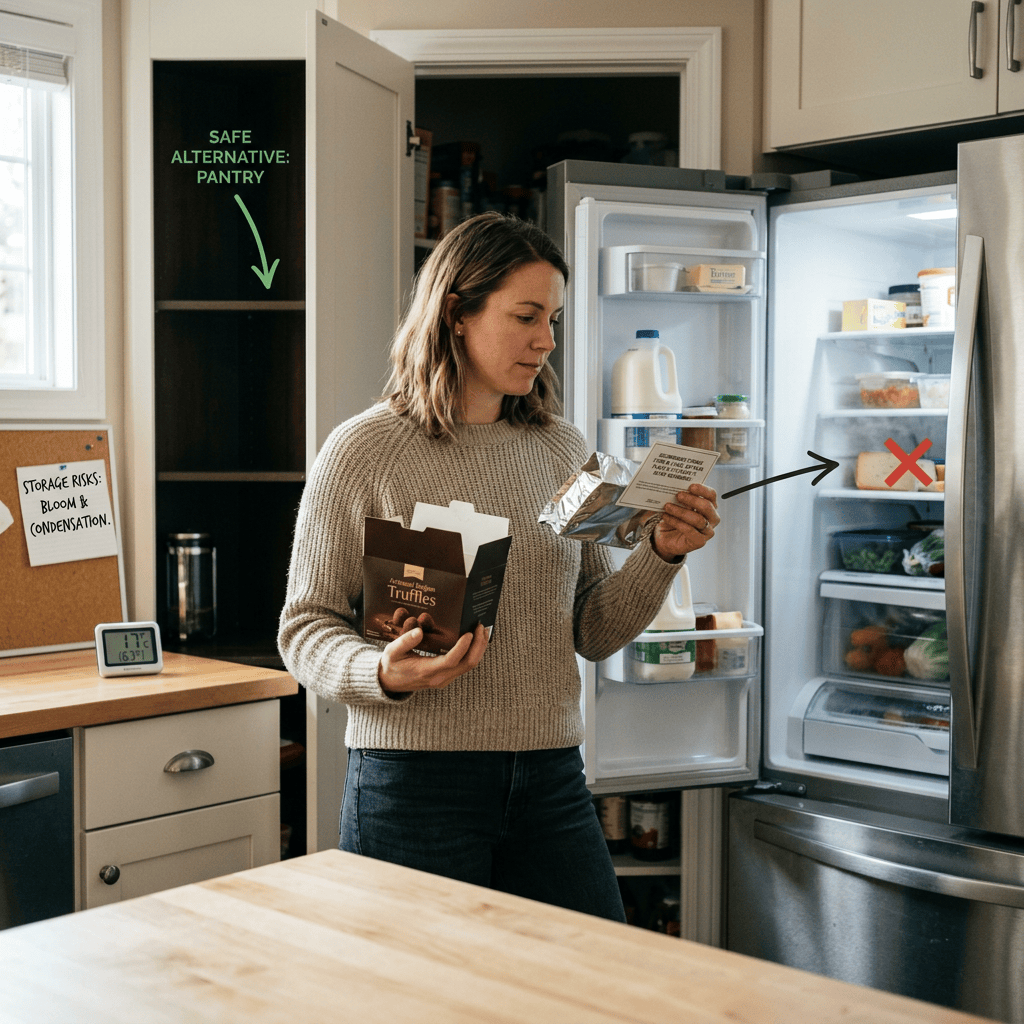
In most cases, chocolate candies will store best in a cool, dry area protected from direct sunlight. Pantries or cabinets may provide suitable locations for storing chocolate candies, providing you keep them away from heat sources (such as ovens), dishwashers, and direct sun exposure. In addition, maintaining steady room temperatures is generally gentler on chocolates than constantly transferring them between warmer and colder environments.
Refrigerators hold significantly more humidity than consumers realize. As a result of this increased moisture content, when a cold box moves into a warmer environment, small droplets of condensation may form on the chocolate. Those droplets of water can cause the sugar present on the candy’s surface to become dislodged and migrate to the surface creating “sugar bloom.” Additionally, the candy may lose some of its appearance even though it has been stored properly to preserve it.
Odors represent another risk. Chocolates are capable of absorbing the aromas from other foods such as onion, cheese, fish or other foods with strong odors. Paper used for candy packaging typically does little to block these odor-causing molecules. While using a tightly closing top can assist in blocking many of these odors, it cannot guarantee a complete seal at all edges.
Candies containing fillings that include ingredients susceptible to spoilage require special consideration. For example, truffles made with heavy cream, fresh fruits or other perishable ingredients may require cold storage. Follow the manufacturer’s recommendations and/or follow specific guidelines provided in the recipe for proper storage.
Do not assume that all candy packaging presents identical storage requirements. For instance, a solid piece of candy and a piece of candy with a perishable filling do not share identical storage requirements.
If your home becomes excessively warm and you wish to prevent your chocolate from melting, refrigerating your candy may be preferable to allowing it to melt. However, before placing it in the refrigerator, please place the closed candy box inside an additional airtight plastic bag or container. Also, please ensure you position the plastic bag/box away from any foods that produce strong odors. The additional layer of protection provides both an added barrier against humid air and provides another protective layer against odors.
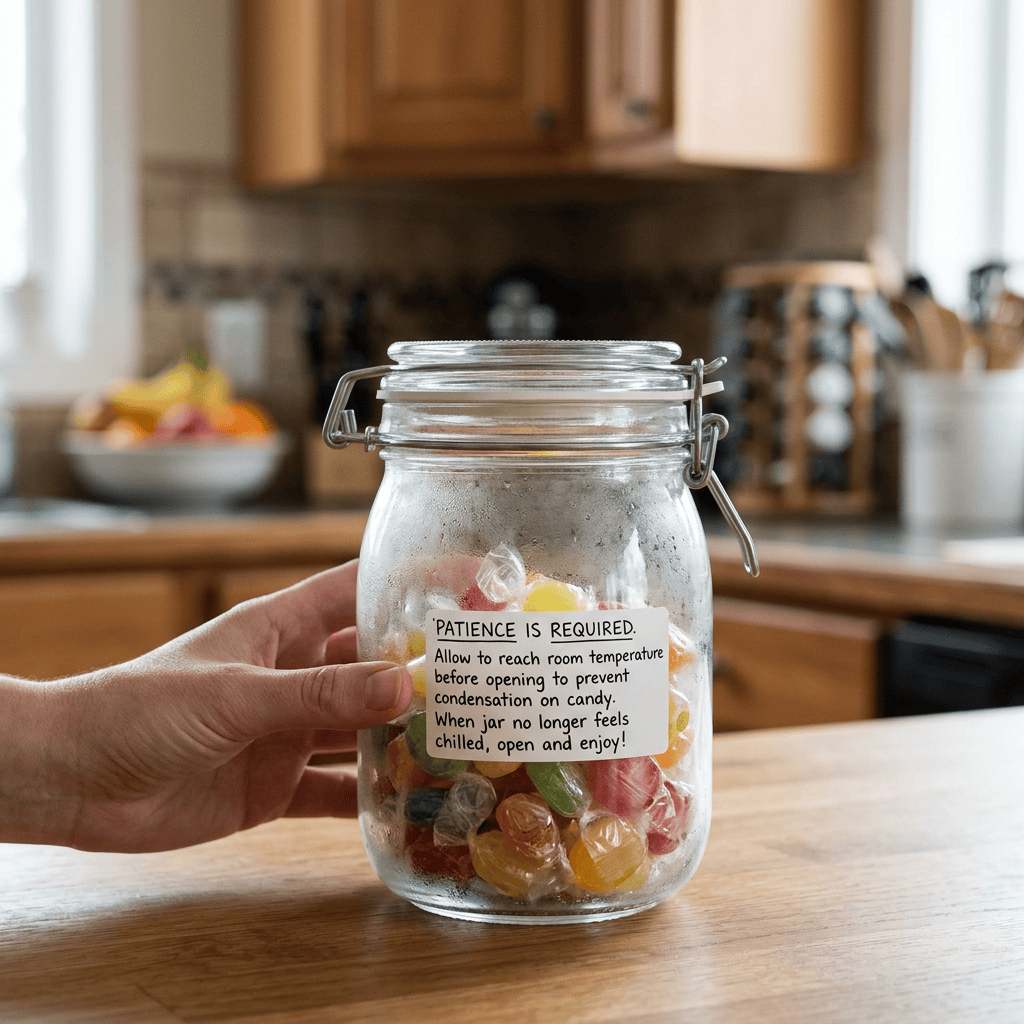
Patience is required when removing the candy from storage. Please allow the sealed container to remain closed until the interior temperature of the container has reached room temperature. If opened prematurely, warm moist air will come into contact with the previously chilled candy causing condensation to occur on its surface. Once the candy appears to be at room temperature (the container is no longer feeling chilled), open the container and enjoy your candy.
Retailers and gift-givers should also take into account the time and conditions experienced during transport/storage. For example, leaving a chilled candy box in a vehicle parked in a hot climate can quickly transform its condition. Consider scheduling delivery/pick-up at cooler hours of the day; utilize a vehicle with good insulation; and advise the recipient of the type of storage conditions maintained prior to presentation/gift giving. A brief storage note can help avoid common mistakes associated with gift giving (e.g., placement near windows).
Therefore, the decision regarding whether or not to chill candy packaging is NOT applicable across all types of candy packaging. Always refer to the package directions; select a cool/dry shelf when possible; and utilize the refrigerator only when necessary, due to excessive heat or inclusion of perishable ingredients in the candy’s filling. Proper storage helps maintain the taste, texture and overall enjoyment associated with each piece of candy contained within a box without requiring unnecessary steps.

