Can Mixed Flavors Fit in One Box? 

Assorted boxes of candy sound easy until one piece starts affecting another. Mint spreads its scent, soft caramels stick together and nuts leave crumbs. Sellers should ask an important question: can different sweets safely be in the same box together? 
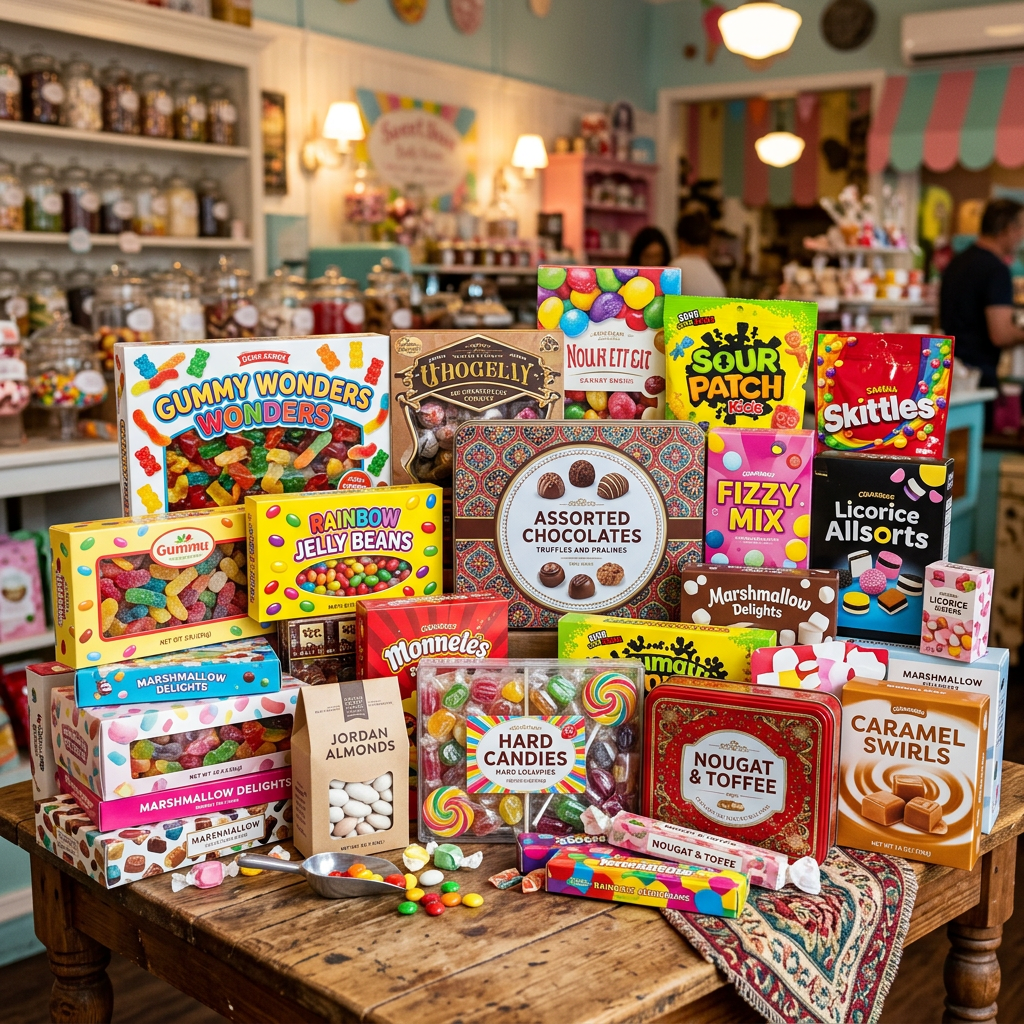
Colorful assortment of boxed candies and sweets displayed on a wooden table
A vibrant assortment of sweets creates a playful candy-shop centerpiece.

Candy boxes can mix fun treats together but each piece needs its own space before closing. Start by sorting treats by smell, texture and filling. Creams that are mild lose their taste next to strong mint or coffee candies. Soft pieces can press hard candies and lose their shape too. Anything that leaks, sheds sugar or breaks into pieces needs extra room. Grouping first shows which sweets get along well together.

Paper cups allow each piece its own space. Workers can lift candy without direct contact too and catch little crumbs. Dividing trays add more space between flavors as well. But cups and walls aren’t impenetrable barriers so they can’t be trusted to block allergens from getting to other things either. 

Allergens leave traces on tools, gloves, tables and packages if candy made with things like peanuts, tree nuts, milk, soy, wheat or other listed allergens. Having dividers inside boxes doesn’t remove that risk either. Follow food rules, use clear labels and consult a food expert if you’re not sure how to proceed correctly.

Order matters during packing. Finish candies with fewer allergens concerns before opening other batches if that fits shop safety plan. Clean work area well between each run. Use clearly marked trays and tools so workers don’t grab the wrong thing during a rush. 
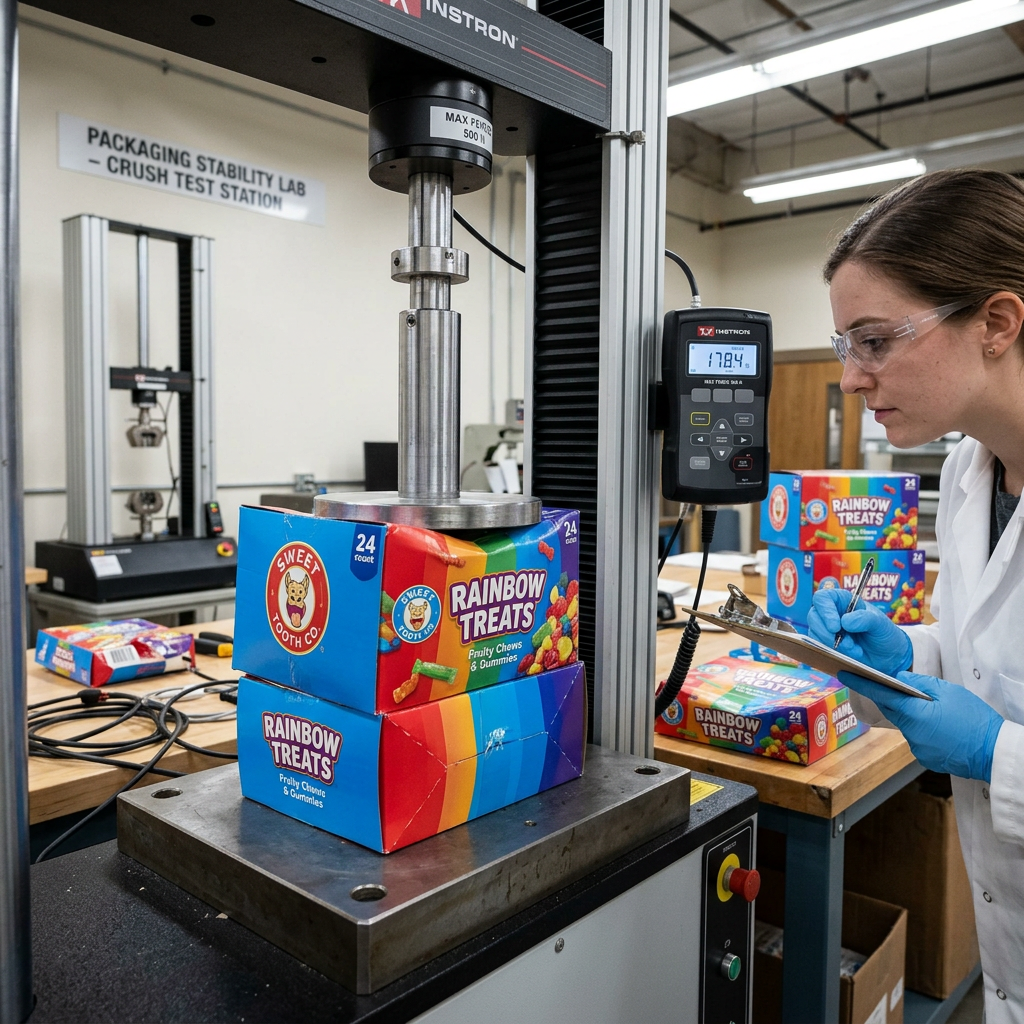
Technician testing stacked Rainbow Treats boxes with a compression machine
A technician evaluates stacked candy boxes in a controlled crush stability test.

Written steps make a safe routine easier to repeat. Next, build a sample box and let it sit. Open it after one day and check if smells have moved, wrappers have loosened or soft centers have leaked. Then test it to see how it performs for as long as a customer might keep the package. Something that looks fine after ten minutes might behave very differently after a few warm days.

A simple map makes treats easier to enjoy. It shows where each flavor is and which pieces contain important allergens. Place this map where buyers can see it before picking a treat. Clear facts eliminate poking, squeezing or guessing and keep remaining candy neat for others too. 

Good boxes of candy do not mix random leftovers together. Instead, they bring flavors that were picked to live together. Thoughtful grouping, careful rules and clear facts help buyers know exactly what they are eating. When each piece has a reason to be there, opening and enjoying the whole box feels easy.
Should Candy Boxes Go Cold?

Chocolate candies can often appear as if they belong in the refrigerator. While cold temperatures provide one safe option, they also come with potential risks. Prior to placing a candy box in the refrigerator, check the contents of the box, check the recommended storage instructions provided by the manufacturer, and consider an alternative location within your home.

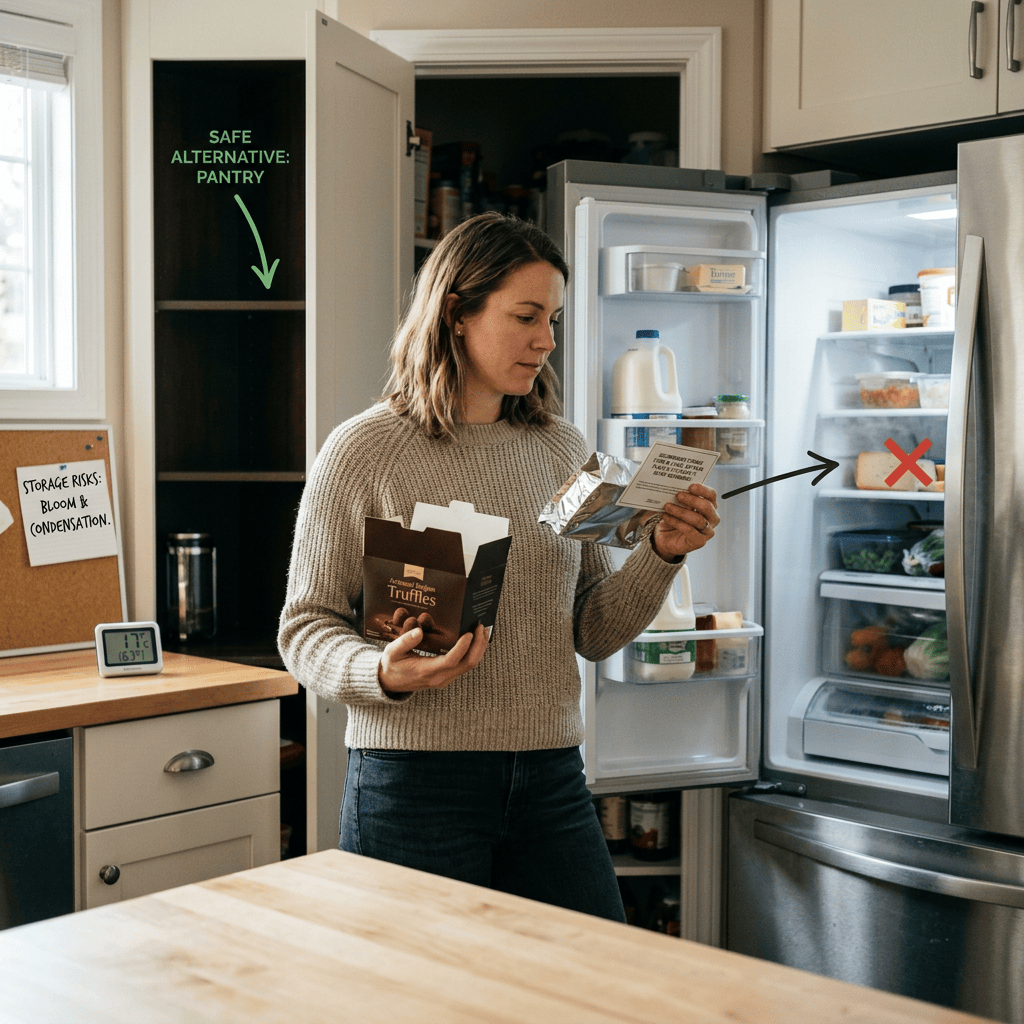
Woman holding truffles and packaged food beside open refrigerator; text reads “SAFE ALTERNATIVE: PANTRY” and “STORAGE RISK: BLOOM & CONDENSATION.”
A shopper compares chocolate storage choices beside an open refrigerator and pantry.

In most cases, chocolate candies will store best in a cool, dry area protected from direct sunlight. Pantries or cabinets may provide suitable locations for storing chocolate candies, providing you keep them away from heat sources (such as ovens), dishwashers, and direct sun exposure. In addition, maintaining steady room temperatures is generally gentler on chocolates than constantly transferring them between warmer and colder environments.

Refrigerators hold significantly more humidity than consumers realize. As a result of this increased moisture content, when a cold box moves into a warmer environment, small droplets of condensation may form on the chocolate. Those droplets of water can cause the sugar present on the candy’s surface to become dislodged and migrate to the surface creating “sugar bloom.” Additionally, the candy may lose some of its appearance even though it has been stored properly to preserve it.

Odors represent another risk. Chocolates are capable of absorbing the aromas from other foods such as onion, cheese, fish or other foods with strong odors. Paper used for candy packaging typically does little to block these odor-causing molecules. While using a tightly closing top can assist in blocking many of these odors, it cannot guarantee a complete seal at all edges.

Candies containing fillings that include ingredients susceptible to spoilage require special consideration. For example, truffles made with heavy cream, fresh fruits or other perishable ingredients may require cold storage. Follow the manufacturer’s recommendations and/or follow specific guidelines provided in the recipe for proper storage.

Do not assume that all candy packaging presents identical storage requirements. For instance, a solid piece of candy and a piece of candy with a perishable filling do not share identical storage requirements.

If your home becomes excessively warm and you wish to prevent your chocolate from melting, refrigerating your candy may be preferable to allowing it to melt. However, before placing it in the refrigerator, please place the closed candy box inside an additional airtight plastic bag or container. Also, please ensure you position the plastic bag/box away from any foods that produce strong odors. The additional layer of protection provides both an added barrier against humid air and provides another protective layer against odors.

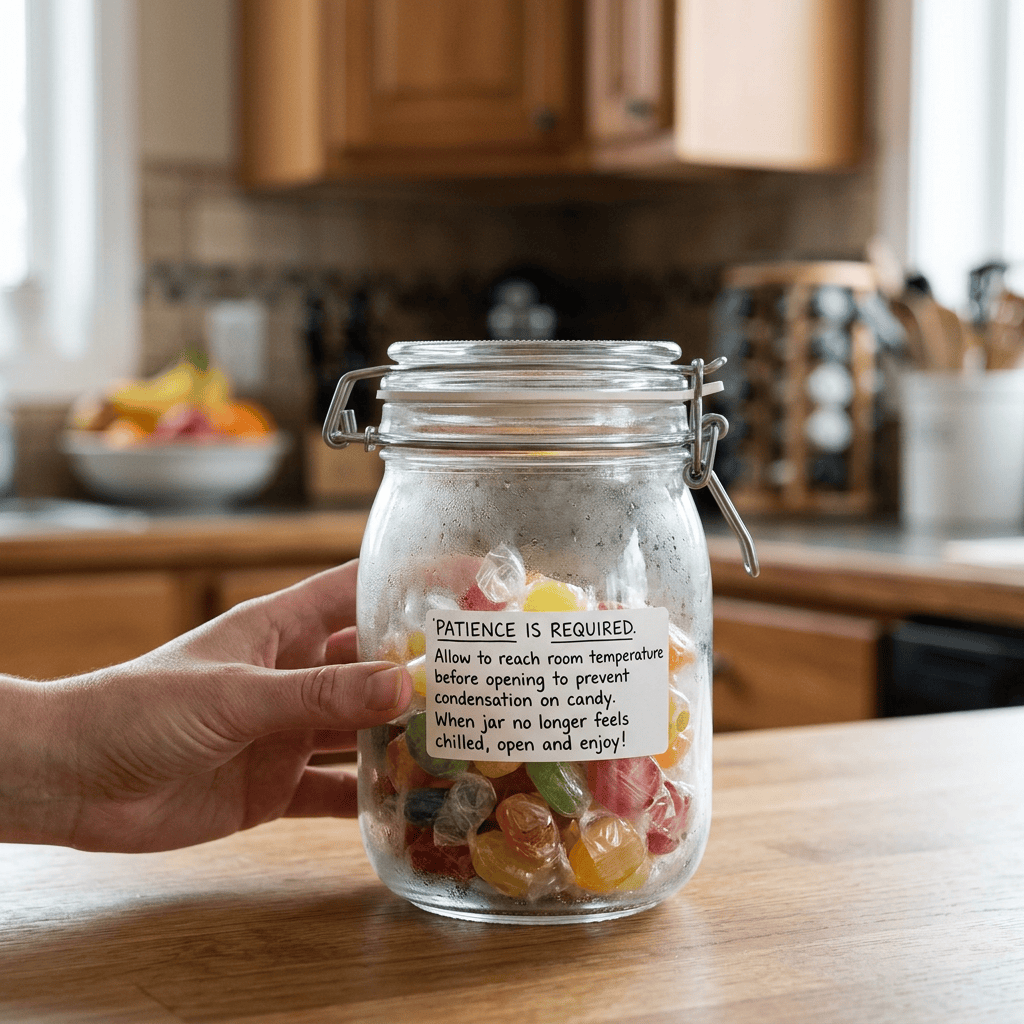
Hand holding candy jar labeled “PATIENCE IS REQUIRED. Allow to reach room temperature before opening to prevent condensation on candy. When jar no longer feels chilled, open and enjoy!”
A hand holds a jar of colorful candies labeled with instructions to let them reach room temperature before opening.

Patience is required when removing the candy from storage. Please allow the sealed container to remain closed until the interior temperature of the container has reached room temperature. If opened prematurely, warm moist air will come into contact with the previously chilled candy causing condensation to occur on its surface. Once the candy appears to be at room temperature (the container is no longer feeling chilled), open the container and enjoy your candy.

Retailers and gift-givers should also take into account the time and conditions experienced during transport/storage. For example, leaving a chilled candy box in a vehicle parked in a hot climate can quickly transform its condition. Consider scheduling delivery/pick-up at cooler hours of the day; utilize a vehicle with good insulation; and advise the recipient of the type of storage conditions maintained prior to presentation/gift giving. A brief storage note can help avoid common mistakes associated with gift giving (e.g., placement near windows).

Therefore, the decision regarding whether or not to chill candy packaging is NOT applicable across all types of candy packaging. Always refer to the package directions; select a cool/dry shelf when possible; and utilize the refrigerator only when necessary, due to excessive heat or inclusion of perishable ingredients in the candy’s filling. Proper storage helps maintain the taste, texture and overall enjoyment associated with each piece of candy contained within a box without requiring unnecessary steps.