Pick the Best Candy Box

Not all candy is alike. Some are small and hard. Others are soft and chewy, or covered in chocolate. Therefore, no single style of candy box will suit all candies.

Choosing the correct candy box will make packing easier and allow your candy to appear appealing when opened by the customer.

Consider Your Products
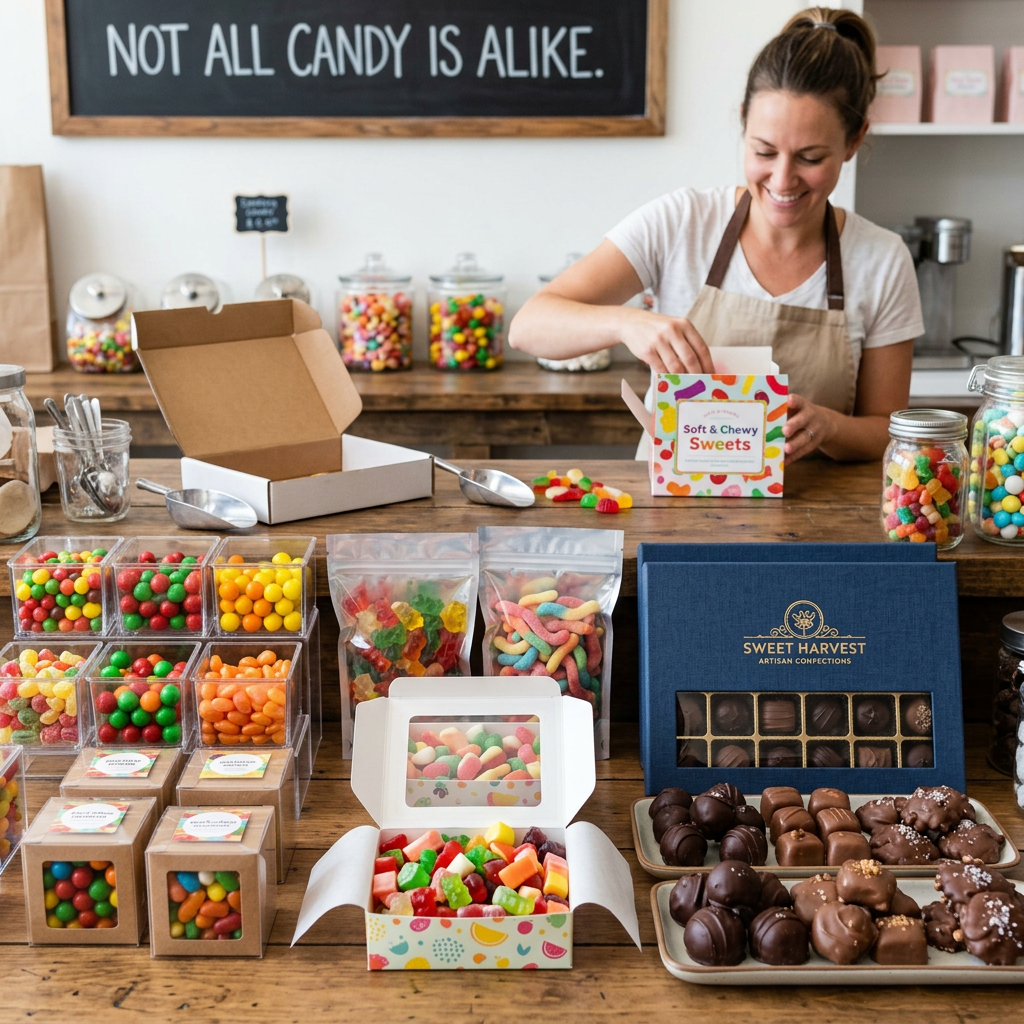
Candy maker packing colorful sweets in an artisan candy shop
A candy maker prepares colorful sweets among jars, gift boxes, and handcrafted chocolates.

Firstly, take stock of the candy products you wish to pack.

Chocolate coated candies may require some space so as not to rub against each other. Fudge is typically heavier than most candies and therefore requires a stronger box. For smaller candies, use a tray or cup to prevent them from falling out of the box.

In addition to these considerations regarding the overall shape, size and weight of your candy products, consider the color scheme (if applicable) and the product’s appeal prior to selecting a box.

This preliminary consideration may eliminate many potential issues related to packing.

Determine How Many Items Will Fit Inside Each Box

Next, determine how much candy you wish to include per package.

You may choose to provide either small boxes containing only a few chocolates. In this case, you may choose to offer larger boxes during holiday seasons and special occasions.

Providing multiple box sizes provides customers with more options. Additionally, providing multiple box sizes reduces the likelihood of placing an inadequate quantity of candy in a larger box.

There should be sufficient room for the candy within the box but the candy should not have enough room to roll or slide throughout the entire interior area of the box.

Provide Visibility

Candies are generally visually appealing items that will sell themselves.

Therefore, if your candies are colorful and/or are enhanced with decorations such as sprinkles, etc., consider using a box with a transparent window so the customer can view their purchase before purchasing. This will likely be beneficial for packaging such products as chocolates, fudge, cookies, etc.

In addition, a window on the box will benefit the giver when gifting your candies. The recipient will get a glimpse of the contents before opening the box.

Do Not Forget the Interior Packaging

The interior of the box is important as well.

Utilize candy cups, candy trays, candy pads and other internal insertions (i.e. dividers, etc.) to organize and stabilize your candy products. These inserts will prevent individual candies from colliding with each other.
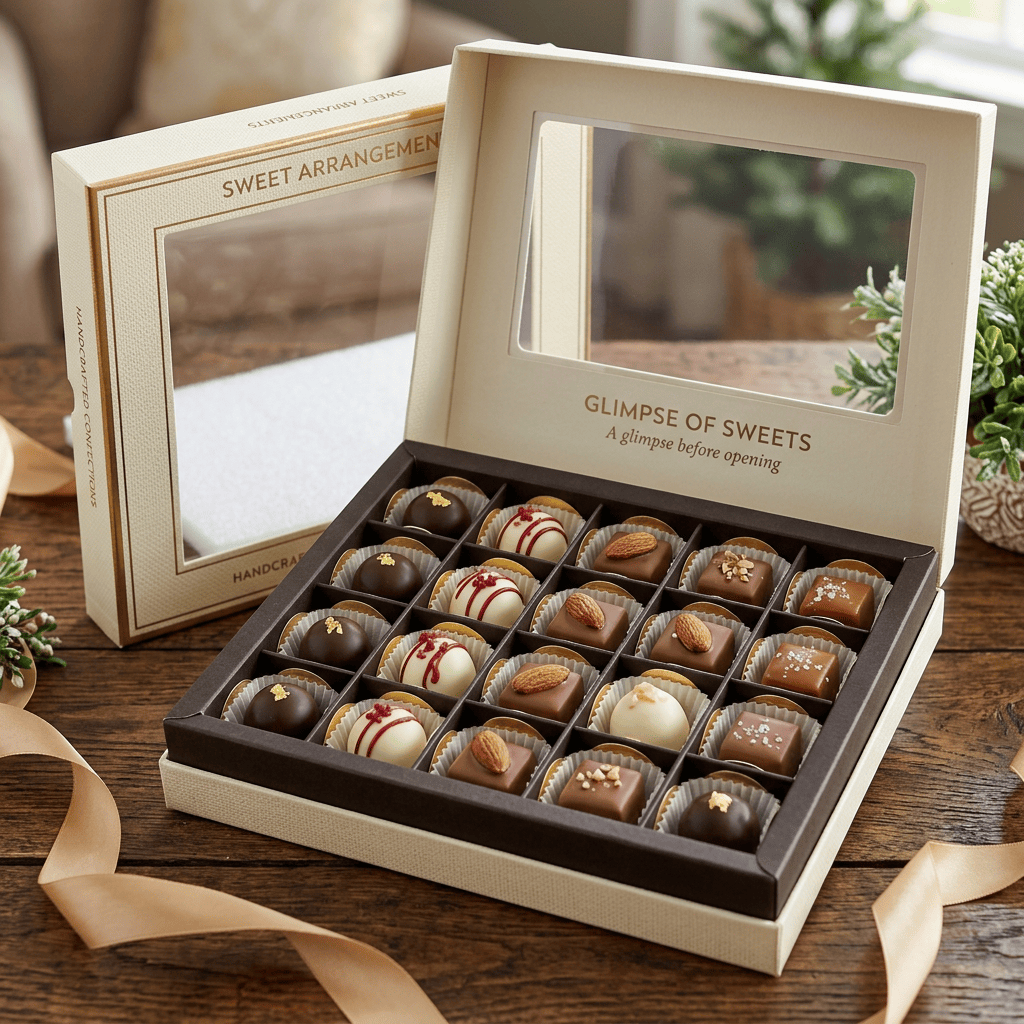
Open gift box displaying assorted decorated chocolates beside matching packaging
An elegant box of assorted handcrafted chocolates awaits its recipient.

These types of inserts will be particularly valuable for candies that tend to crack, melt or otherwise become disfigured.

Select the Appropriate Candy Box for Your Product

Good candy packaging doesn’t have to be complex.

Simply think about your products, how many you plan to place in each box and how you would like them to look once placed in the box.

Appropriately sized candy boxes will help protect your products while allowing for easier transportation and sales, as well as easier distribution as gifts.

When the size of the candy box is properly matched to the product(s) contained therein; all aspects will function slightly better.
Why Candy Breaks Fast

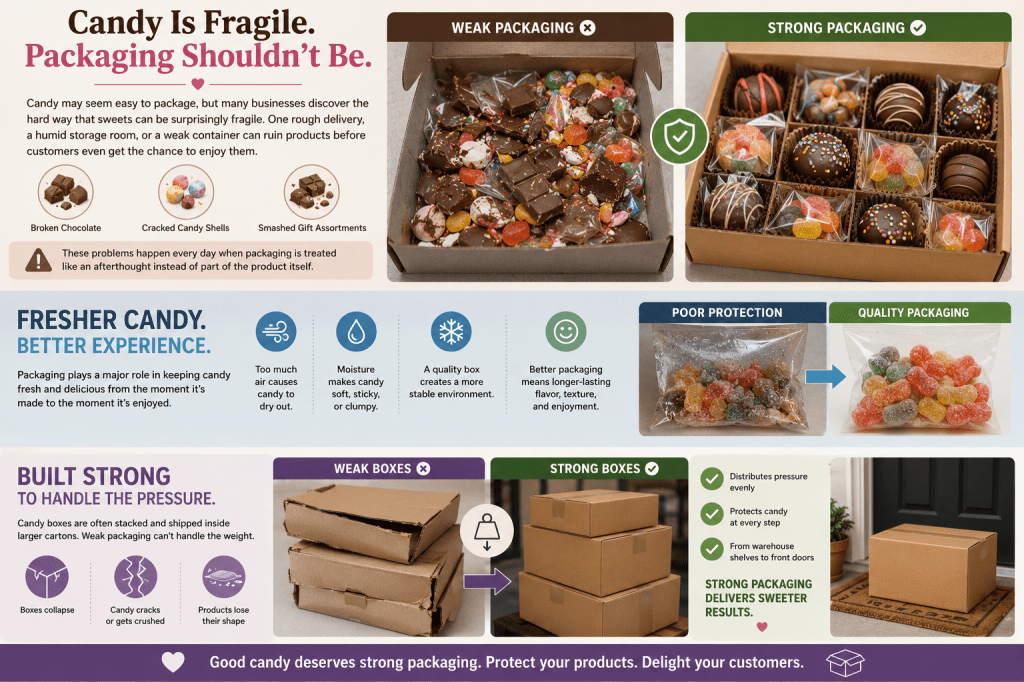
Candy may seem easy to package, but many businesses discover the hard way that sweets can be surprisingly fragile. One rough delivery, a humid storage room, or a weak container can ruin products before customers even get the chance to enjoy them. Broken chocolate, cracked candy shells, and smashed gift assortments are problems that happen every day when packaging is treated like an afterthought instead of part of the product itself.

One question candy sellers often ask is why some products stay fresh longer than others. Packaging plays a major role in that answer. Candy exposed to air too often may dry out, soften, or lose texture faster than expected. Certain treats can even absorb moisture from the environment and become sticky or clumpy. A quality candy box helps create a more stable environment around the product so flavor and texture hold up longer during storage and delivery.

Another issue businesses run into involves stacked shipments. Candy boxes are frequently packed together inside larger cartons during transport. Weak packaging may collapse under weight, causing products underneath to crack or flatten. Stronger boxes help distribute pressure more evenly so candy holds its shape from warehouse shelves to front doors.

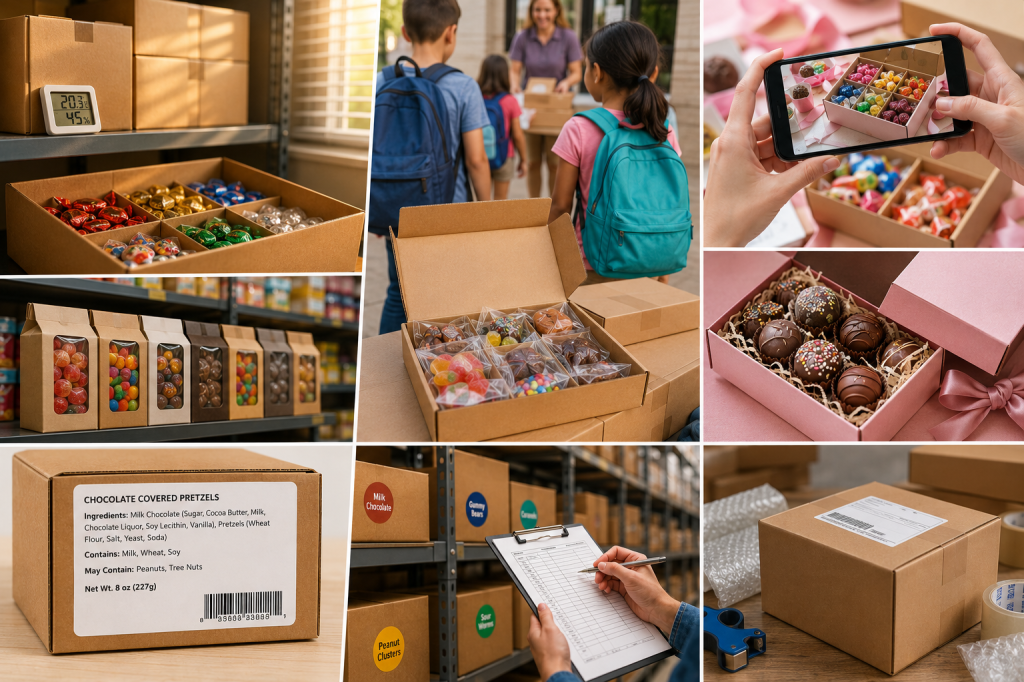
Small candy companies also ask how packaging affects online orders. Internet sales have changed how candy moves from seller to buyer. Products may now travel across several states instead of just across town. That longer journey increases the chances of rough handling and temperature changes. Candy boxes designed for shipping can help reduce movement inside packages and protect items from shifting around during transit.

Many customers buy candy for celebrations, which means appearance matters almost as much as taste. Holiday parties, weddings, birthdays, and corporate events often require candy displays that look clean and organized. Neatly packed candy boxes help products arrive looking more polished and professional. People notice when packaging feels secure instead of flimsy or crushed.

Another common question centers around storing candy safely in shops or homes. Heat and sunlight can quickly affect many sweets, especially chocolate products. Proper boxes help shield candy from direct exposure and make storage easier to manage. Organized packaging also helps businesses rotate inventory more efficiently so older products get used before newer stock.

Fundraisers and schools use candy packaging differently than retail stores. In those situations, candy often changes hands many times before being eaten. Children carry products in backpacks, volunteers transport them in vehicles, and organizers stack them during events. Candy boxes help reduce messes and protect products through all those extra steps.

People are also paying closer attention to presentation on social media. Candy businesses often post product photos online, and customers share pictures of gifts or purchases. Packaging that looks neat in photos can help products appear more premium and trustworthy. Even simple candy can seem more valuable when presented inside a clean, sturdy box instead of a wrinkled container.

Another benefit many businesses appreciate is easier labeling. Candy boxes provide clear surfaces for ingredients, flavors, allergy warnings, or branding information. This helps customers quickly understand what they are buying without confusion. Organized labels can also make shelves look cleaner and more professional.

The right candy packaging does far more than hold sweets in place. It helps products survive shipping, protects freshness, improves appearance, supports organization, and creates a better buying experience overall. Customers may come for the candy itself, but strong packaging helps ensure they receive it the way the business intended.

Should Candy Boxes Go Cold?

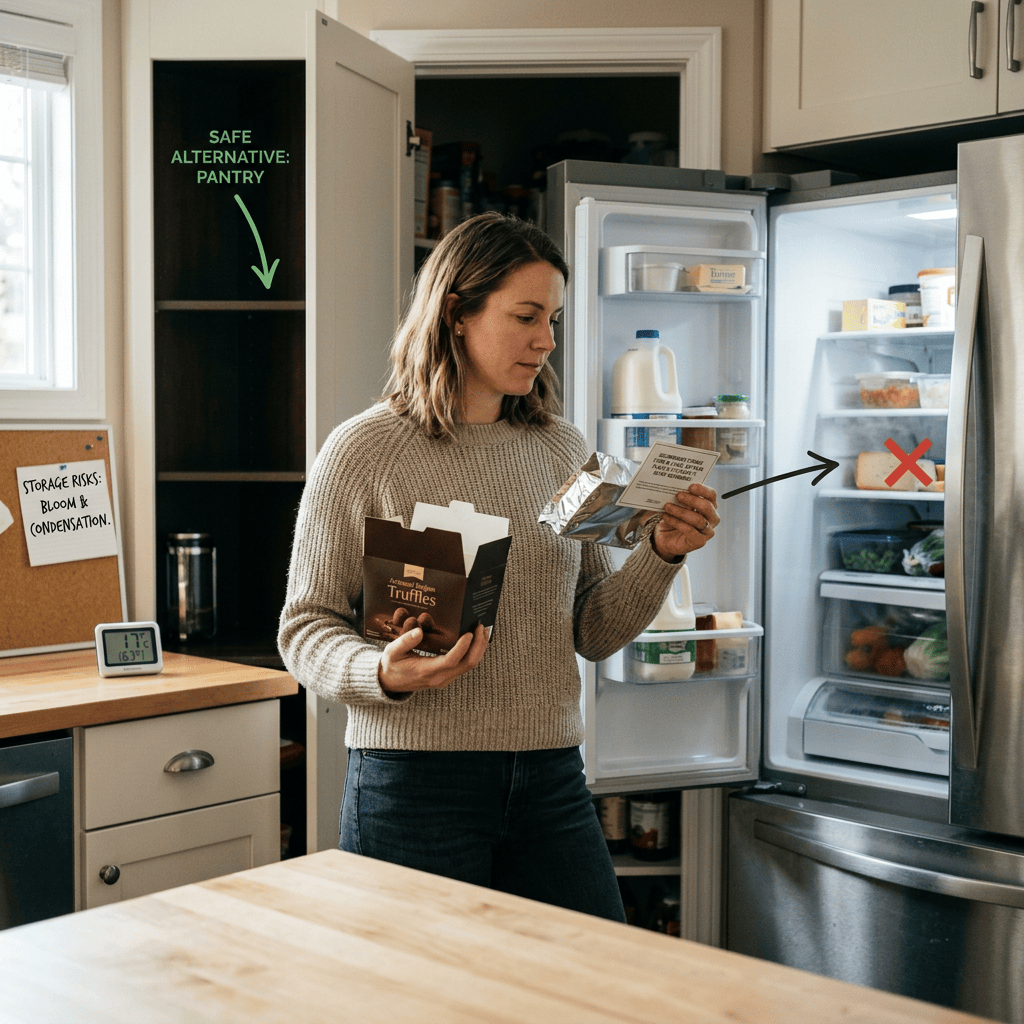
Chocolate candies can often appear as if they belong in the refrigerator. While cold temperatures provide one safe option, they also come with potential risks. Prior to placing a candy box in the refrigerator, check the contents of the box, check the recommended storage instructions provided by the manufacturer, and consider an alternative location within your home.

Woman holding truffles and packaged food beside open refrigerator; text reads “SAFE ALTERNATIVE: PANTRY” and “STORAGE RISK: BLOOM & CONDENSATION.”
A shopper compares chocolate storage choices beside an open refrigerator and pantry.

In most cases, chocolate candies will store best in a cool, dry area protected from direct sunlight. Pantries or cabinets may provide suitable locations for storing chocolate candies, providing you keep them away from heat sources (such as ovens), dishwashers, and direct sun exposure. In addition, maintaining steady room temperatures is generally gentler on chocolates than constantly transferring them between warmer and colder environments.

Refrigerators hold significantly more humidity than consumers realize. As a result of this increased moisture content, when a cold box moves into a warmer environment, small droplets of condensation may form on the chocolate. Those droplets of water can cause the sugar present on the candy’s surface to become dislodged and migrate to the surface creating “sugar bloom.” Additionally, the candy may lose some of its appearance even though it has been stored properly to preserve it.

Odors represent another risk. Chocolates are capable of absorbing the aromas from other foods such as onion, cheese, fish or other foods with strong odors. Paper used for candy packaging typically does little to block these odor-causing molecules. While using a tightly closing top can assist in blocking many of these odors, it cannot guarantee a complete seal at all edges.

Candies containing fillings that include ingredients susceptible to spoilage require special consideration. For example, truffles made with heavy cream, fresh fruits or other perishable ingredients may require cold storage. Follow the manufacturer’s recommendations and/or follow specific guidelines provided in the recipe for proper storage.

Do not assume that all candy packaging presents identical storage requirements. For instance, a solid piece of candy and a piece of candy with a perishable filling do not share identical storage requirements.

If your home becomes excessively warm and you wish to prevent your chocolate from melting, refrigerating your candy may be preferable to allowing it to melt. However, before placing it in the refrigerator, please place the closed candy box inside an additional airtight plastic bag or container. Also, please ensure you position the plastic bag/box away from any foods that produce strong odors. The additional layer of protection provides both an added barrier against humid air and provides another protective layer against odors.

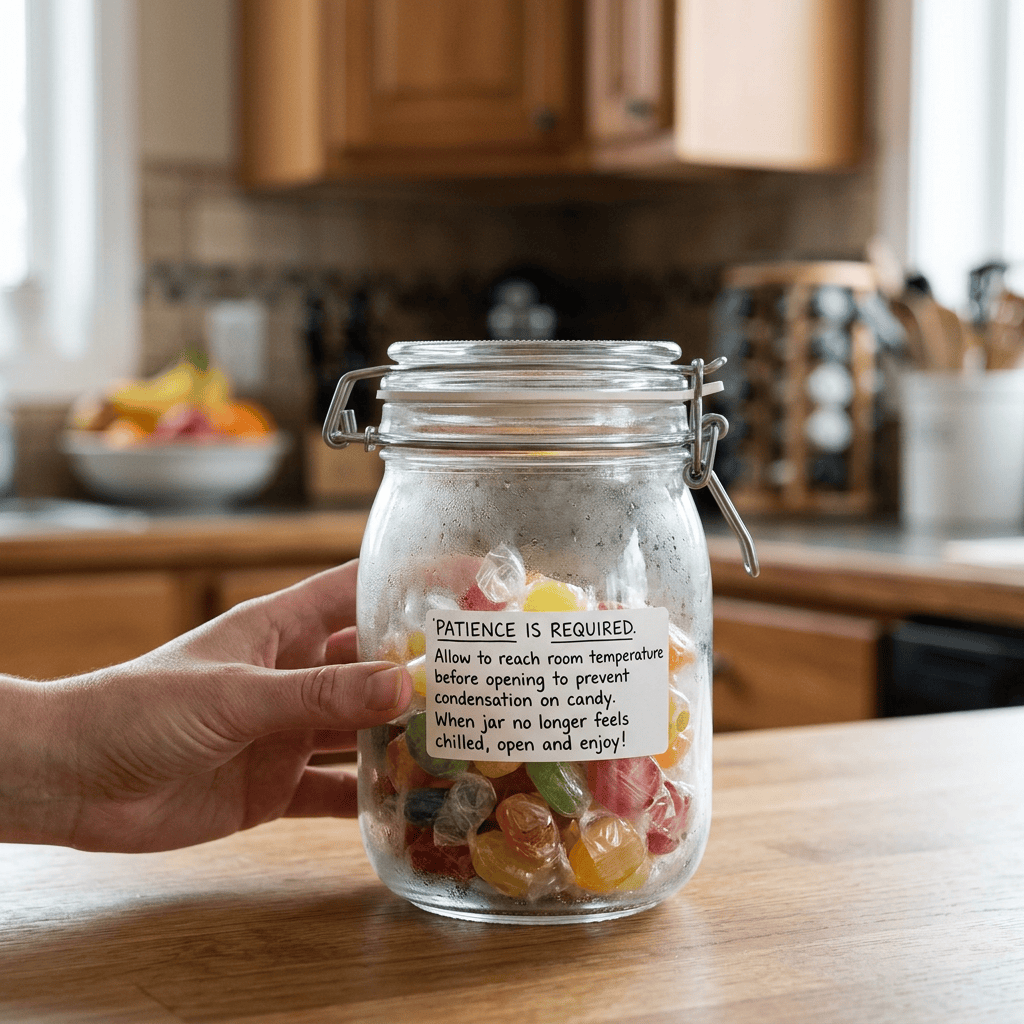
Hand holding candy jar labeled “PATIENCE IS REQUIRED. Allow to reach room temperature before opening to prevent condensation on candy. When jar no longer feels chilled, open and enjoy!”
A hand holds a jar of colorful candies labeled with instructions to let them reach room temperature before opening.

Patience is required when removing the candy from storage. Please allow the sealed container to remain closed until the interior temperature of the container has reached room temperature. If opened prematurely, warm moist air will come into contact with the previously chilled candy causing condensation to occur on its surface. Once the candy appears to be at room temperature (the container is no longer feeling chilled), open the container and enjoy your candy.

Retailers and gift-givers should also take into account the time and conditions experienced during transport/storage. For example, leaving a chilled candy box in a vehicle parked in a hot climate can quickly transform its condition. Consider scheduling delivery/pick-up at cooler hours of the day; utilize a vehicle with good insulation; and advise the recipient of the type of storage conditions maintained prior to presentation/gift giving. A brief storage note can help avoid common mistakes associated with gift giving (e.g., placement near windows).

Therefore, the decision regarding whether or not to chill candy packaging is NOT applicable across all types of candy packaging. Always refer to the package directions; select a cool/dry shelf when possible; and utilize the refrigerator only when necessary, due to excessive heat or inclusion of perishable ingredients in the candy’s filling. Proper storage helps maintain the taste, texture and overall enjoyment associated with each piece of candy contained within a box without requiring unnecessary steps.