How a Small Box Can Sweeten Big Business

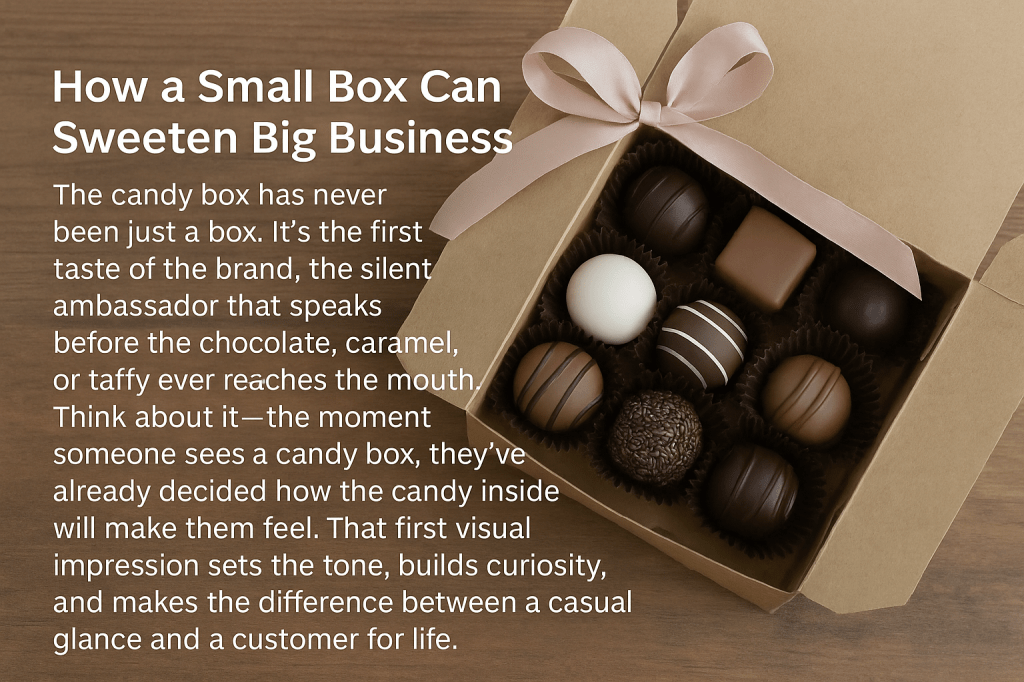
The candy box has never been just a box. It’s the first taste of the brand, the silent ambassador that speaks before the chocolate, caramel, or taffy ever reaches the mouth. Think about it—the moment someone sees a candy box, they’ve already decided how the candy inside will make them feel. That first visual impression sets the tone, builds curiosity, and makes the difference between a casual glance and a customer for life.
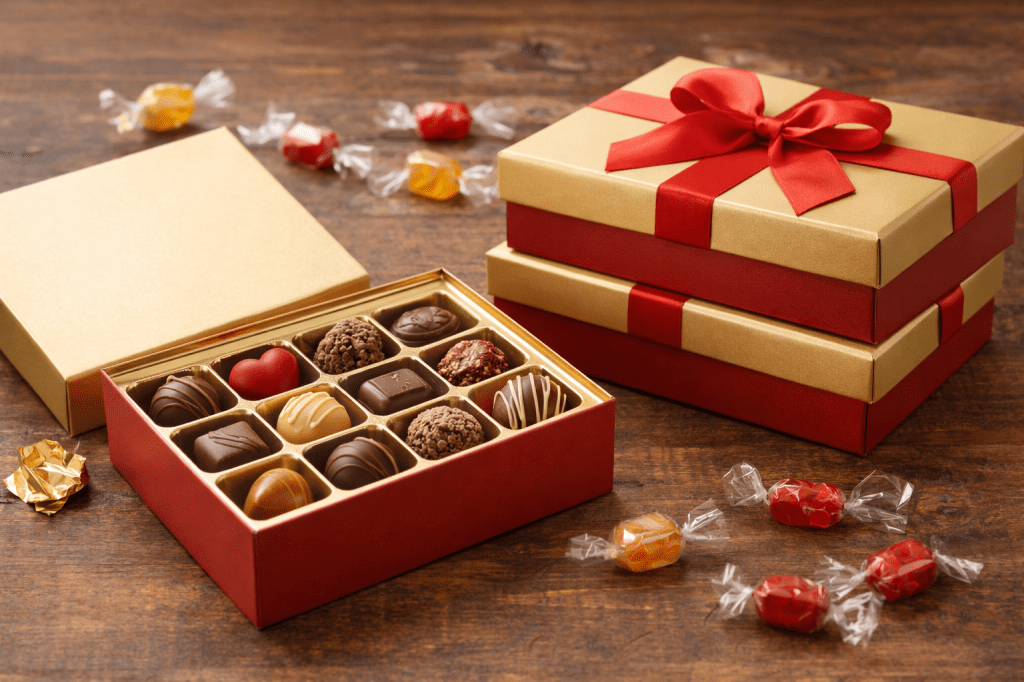
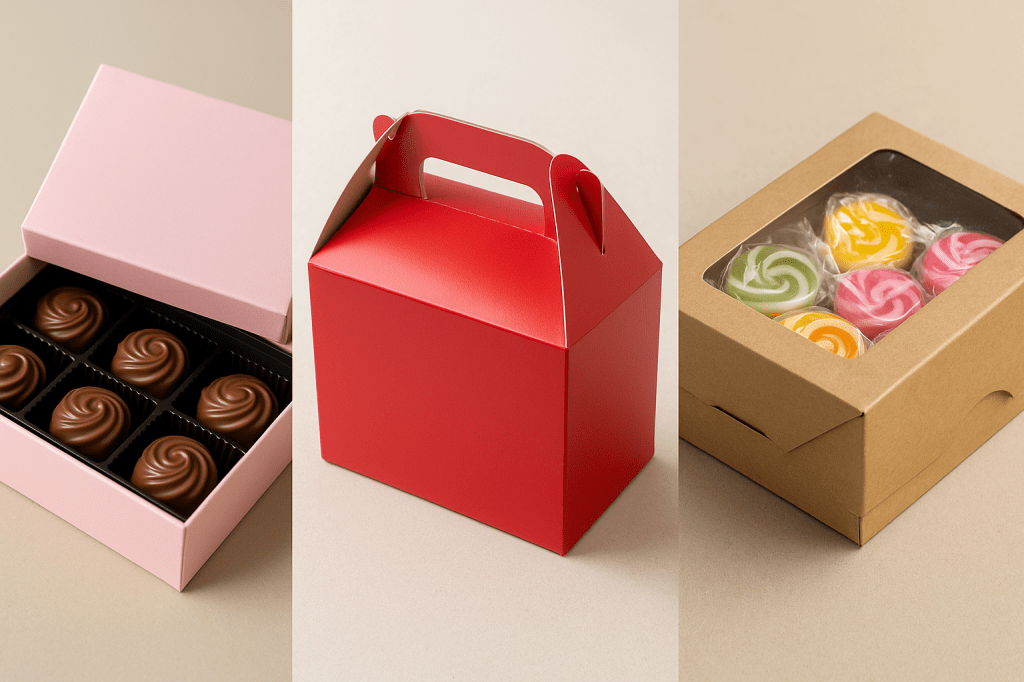
A candy box does more than protect sweets; it transforms them. A box with a soft matte finish and clean edges says “premium” before the seal is even broken. A shiny red folding carton whispers “holiday,” while a simple kraft tuck-top says “authentic and homemade.” The language of packaging is silent but powerful. It’s what allows small candy makers to compete with large factories. They might not have big advertising budgets, but they can use packaging to tell a story—one rooted in care, tradition, and warmth.

The beauty of a candy box lies in how it connects generations. We all remember the feeling of opening a box of chocolates as kids—the anticipation, the smell of sugar and cocoa, the glimmer of foil. That nostalgia is still the heartbeat of the candy industry. Modern packaging may use better materials, sharper designs, and smarter printing, but the goal hasn’t changed: make people feel joy before they even taste the sweetness. Every brand that masters that feeling wins hearts faster than any discount or coupon.

From an operational point of view, candy boxes are also practical heroes. They stack neatly, ship efficiently, and display beautifully. Their light weight keeps costs low while their sturdiness keeps delicate candies safe from melting, crushing, or sticking together. Retailers love them because they look good on shelves, and customers love them because they’re easy to carry, gift, and reuse. When form and function work this well together, packaging stops being an expense—it becomes a marketing asset.
Today’s market also rewards creativity and responsibility. More customers are looking for recyclable or biodegradable candy boxes, ones that show care for the planet as well as for presentation. A brand that uses eco-friendly packaging tells the world, “We make joy responsibly.” That kind of message earns loyalty. Whether it’s a boutique chocolatier or a growing confectionery company, sustainable packaging now carries emotional value—it feels modern, thoughtful, and honest.
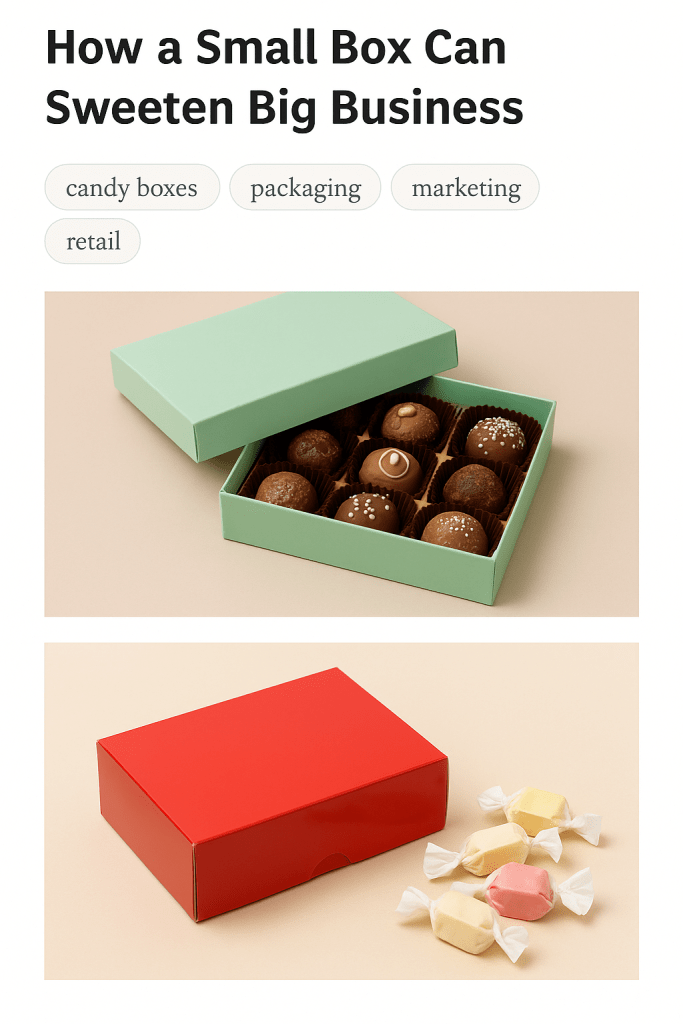
At the end of the day, a candy box is more than a container—it’s the beginning of a story. It holds not just sweets but sentiment. It’s the bridge between the maker’s effort and the customer’s delight. The brands that treat packaging as part of the experience, not just a cost, end up building something priceless: connection. Because when people open a candy box and it feels like an act of care, they don’t just remember the chocolate—they remember how it made them feel. That’s what keeps them coming back for another taste, another story, another little box of happiness.
The Box Count No One Ever Uses

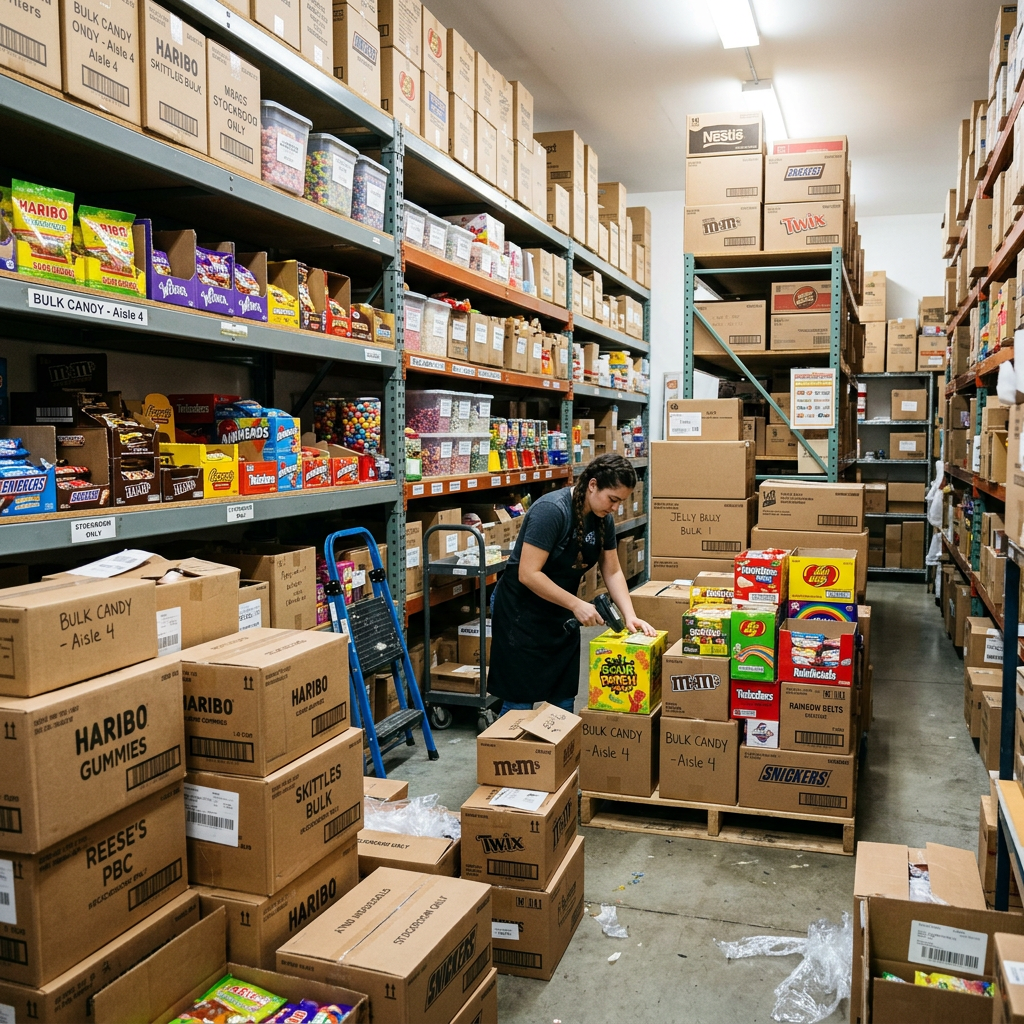
If you buy candy boxes based on guessing, there’s only two ways your store could go wrong. Either you won’t have enough boxes to sell all of the candy you’re selling this week (and lose a lot of potential income), or you’ll have too many and waste money buying them because they’re just sitting around in your stockroom. With a simple inventory before ordering, you can avoid having to deal with either of these problems. It doesn’t take an exact science to know how many candy boxes to buy; it simply takes taking some basic counts of numbers that you probably already have today.

Employee scanning candy boxes in a bulk candy warehouse aisle
A worker scans candy boxes in a warehouse filled with bulk candy inventory.

First, start with the number of candy boxes you’ve sold in the past during a similar time frame. If you’re going through a heavy wedding rush in the Spring, compare it to another Spring wedding rush rather than comparing it to a slow week in Winter. If you don’t have a prior sales list of candy boxes, count all of your firm orders and put your possible orders in a second group. By keeping the two groups separated, you keep yourself from making a hopeful guess into something that looks like a sure thing.

Not every candy order uses the same size box. Some customers may purchase ten small favor boxes while others purchase one large gift box. Create a separate column for each different type and color. Next, enter the number of each box that you have firm orders for. This process can help identify a shortage of packages that would otherwise remain hidden if every package was listed as part of one single total.

A little extra inventory can provide protection against things such as bent boxes, mistakes with packaging, and last-minute orders. How much is the right amount depends on the specific job at hand, the time of year, and how quickly new boxes can get to your location. For example, a store that is close to their supplier may require less excess inventory than a business that must wait for weeks for additional supplies to be delivered. Instead of randomly selecting an amount, review how many unused or damaged boxes were remaining after the last busy period.

You must also consider the date of your order. Determine when your boxes are due to be delivered. Leave adequate time for inspection of the boxes before the packing begins. Delivering boxes on the day of a big event does not give employees sufficient time to resolve issues. On the other hand, delivering boxes early allows employees to address any issues but boxes should not be delivered so far ahead of time that they create a storage issue for months.

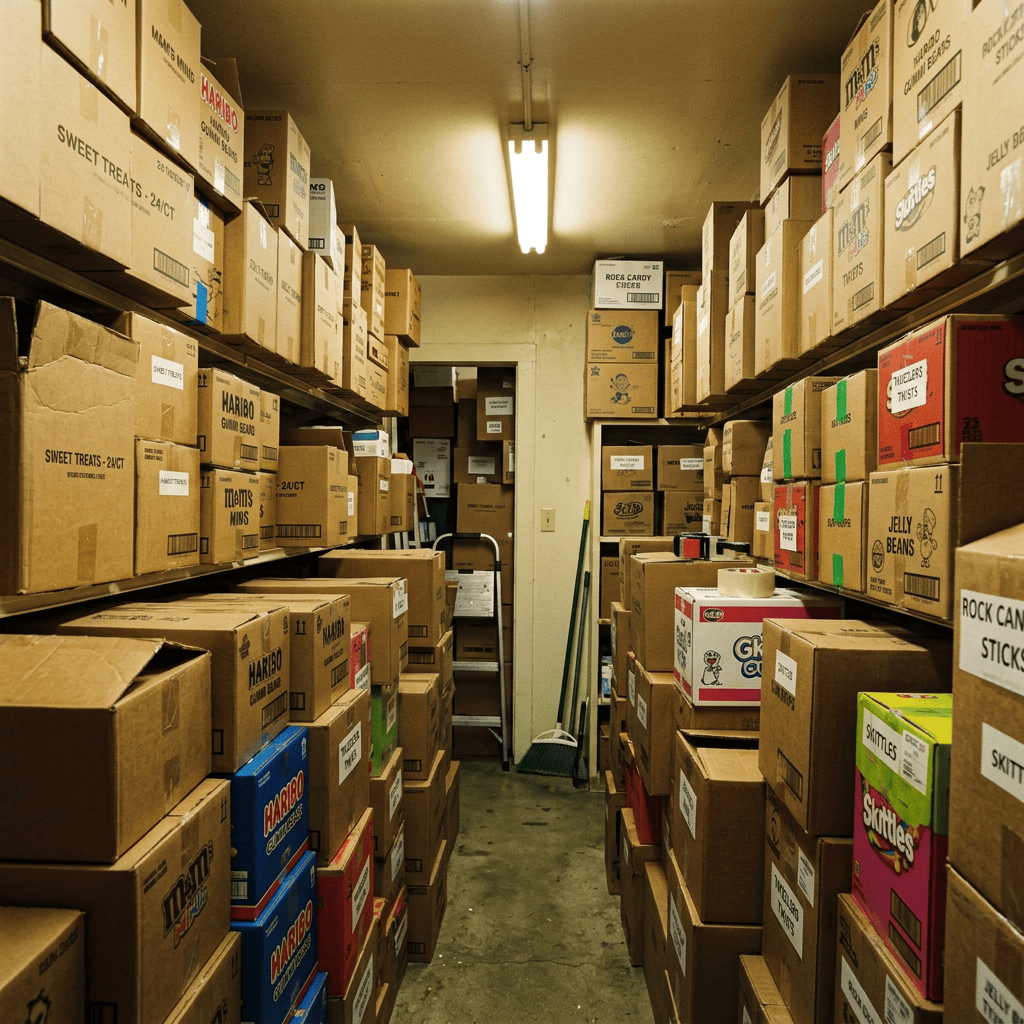
Narrow aisle with stacked cardboard boxes labeled with various candy brands and types
A narrow aisle filled with stacked boxes of assorted candy in a storage room

Just because you save money on an extremely large quantity of candy boxes does not mean you actually saved money. Even though the price per box may appear cheap, it may end up being expensive once you add up all of the space taken by unwanted boxes. When comparing costs, include the entire cost of purchasing a large quantity of candy boxes verses the probable usage. For instance, plain candy boxes can be reused for multiple events where as colored or printed candy boxes related to holidays can be difficult to reuse.

Once the event has ended, document everything while it is still fresh. Record what happened with regard to your order including how many candy boxes were purchased and shipped versus how many were filled, damaged, or remained leftover. Additionally, include a notation regarding any rushed orders or missed opportunities. Documenting your experience in detail will greatly assist you in making better decisions in regards to future purchases. Carefully developing plans for your candy boxes eliminates idle activity and ensures funds are available for other purposes and assists the packing team when customer deliveries occur.

Why Candy Needs Protection

Candy often looks small and simple, but many sweets are surprisingly delicate. A chocolate shell can crack under pressure, soft caramel can flatten, and sugar candies can chip if they hit something hard. Because of this, candy needs protection while it is stored, transported, and shared. Candy boxes provide a simple and reliable way to keep treats safe while also making them easy to present.

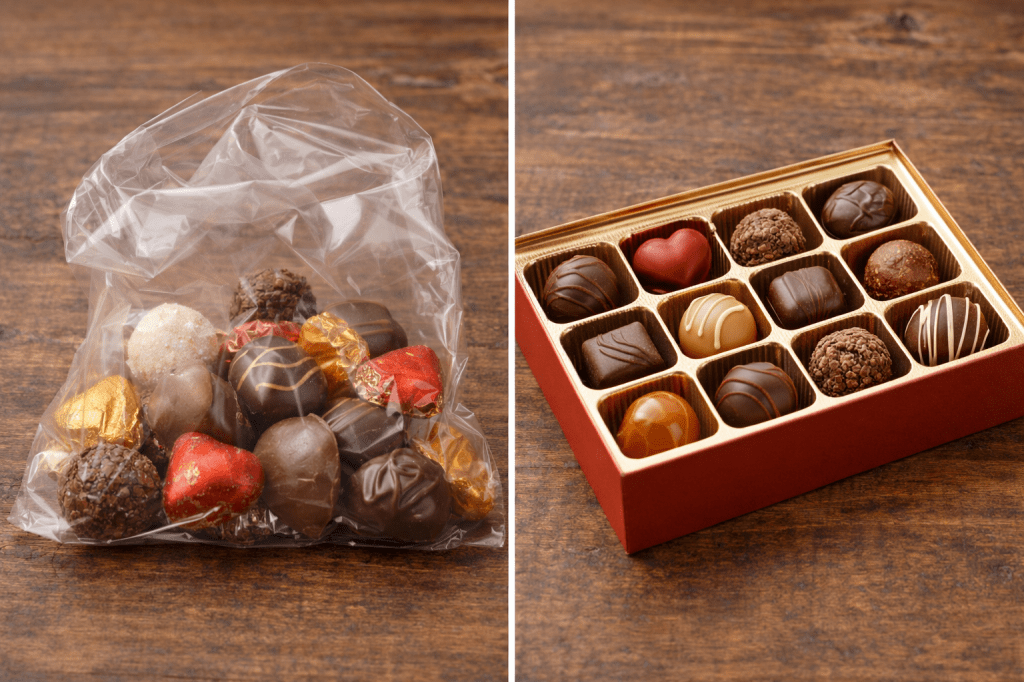
One of the biggest problems candy faces is movement. When sweets travel inside a loose bag, they slide around and bump into each other. This may not seem like a big issue at first, but over time those small bumps can change how candy looks and feels. A smooth chocolate coating may become scratched, or a soft candy may lose its shape. Candy boxes reduce this problem by holding the sweets firmly in place.

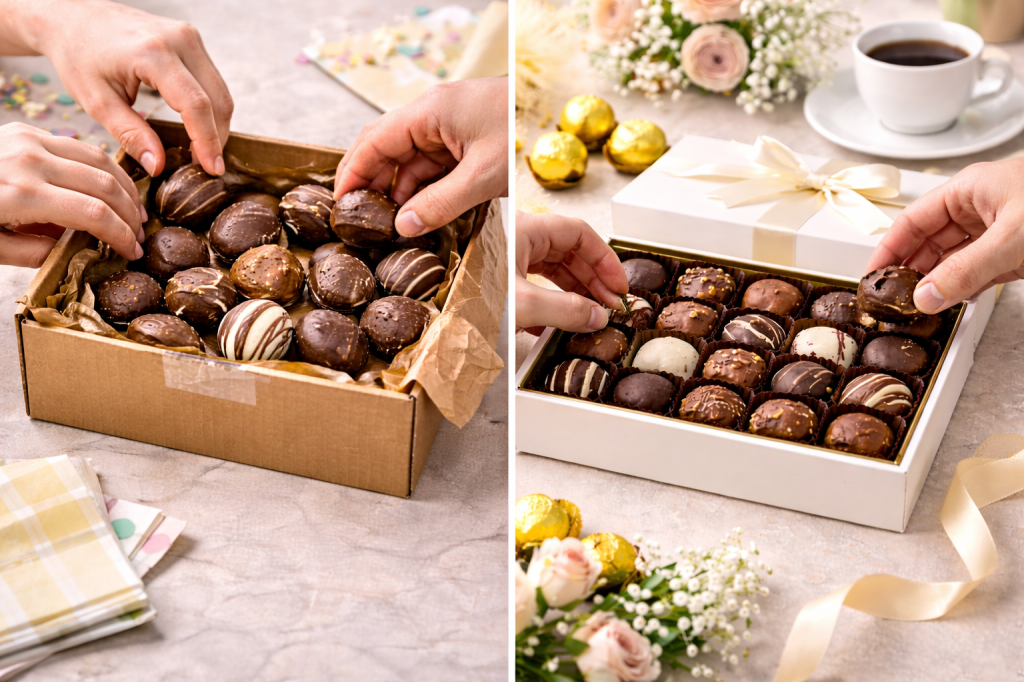
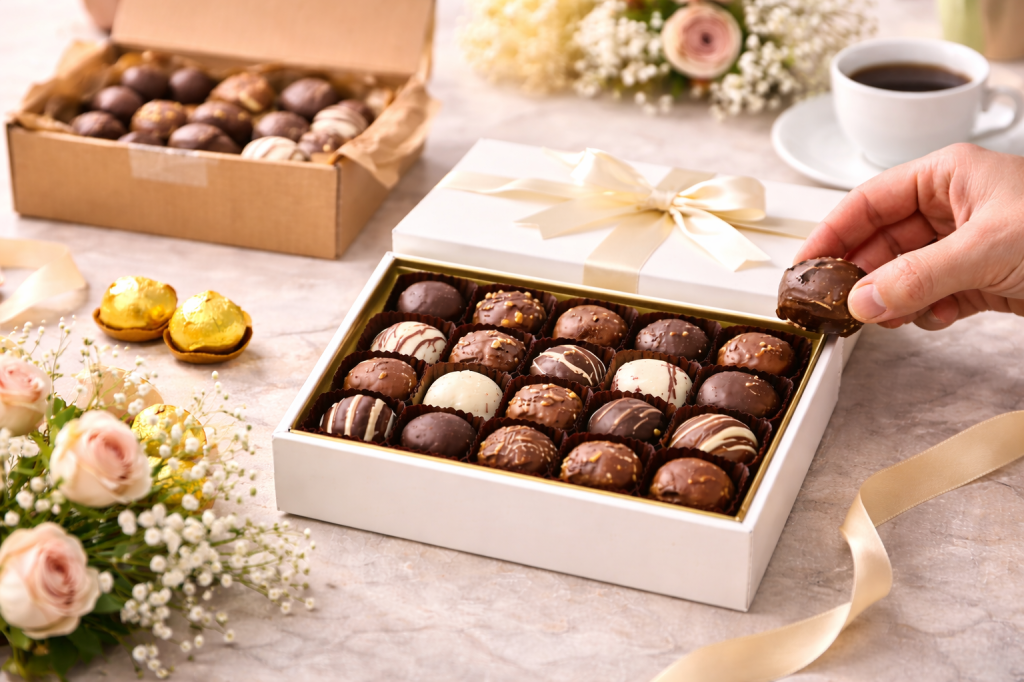
Many candy boxes are designed so each piece rests comfortably inside the container. Some boxes include inserts or trays that create small spaces for individual candies. When chocolates or other sweets sit in their own spots, they stay neat and organized. This makes a big difference when someone opens the box and sees rows of perfectly shaped treats waiting inside.

Temperature changes can also affect candy. While a box cannot stop heat entirely, it can provide an extra layer of protection compared to an open bag. The closed lid shields the candy from light and helps reduce exposure to warm air. This can help sweets stay fresh longer, especially when they are stored on shelves or transported between locations.

Candy boxes also help people create memorable moments. Imagine receiving a small box wrapped with colorful paper. You lift the lid and see a collection of shiny chocolates arranged carefully inside. The experience feels thoughtful and exciting because the candy is presented in a way that feels special. The box turns the candy into something that feels more like a gift than a simple snack.

Many small candy makers rely on boxes when sharing their creations. A person making homemade chocolate bark or caramel squares wants the treats to look as good as they taste. Placing those sweets into a candy box helps maintain their shape and appearance. When friends or family open the box later, the candy still looks inviting and fresh.

Candy boxes are also common during holidays and celebrations. Around Valentine’s Day, heart-shaped boxes filled with chocolates appear in stores and homes. During winter holidays, families often exchange boxes of sweets while visiting relatives. The box keeps the candy protected during travel, ensuring that the treats arrive ready to enjoy.

Fundraisers and school events sometimes use candy boxes as well. Groups selling sweets for a cause want the candy to look clean and appealing. A box provides structure and keeps the treats organized, which helps people feel confident about what they are buying.

Over time, the simple candy box has become part of the experience of enjoying sweets. It protects delicate treats from damage, keeps flavors separated, and creates a sense of excitement when someone lifts the lid. Instead of finding candy crushed at the bottom of a bag, people open a box and discover a neat collection of sweets waiting to be shared. That small difference turns an ordinary treat into something that feels carefully prepared and ready to enjoy.

Make It Gift Worthy

Have you ever bought candy as a gift and felt unsure the moment you picked it up? The flavor might be great. The brand might be trusted. But the box feels light. The lid shifts. The corners look soft. Suddenly it does not feel like a gift anymore.

When people buy candy for someone else, they are not just buying sweets. They are buying a moment.

Candy boxes designed for gifting need to do more than hold product. They need to create anticipation.

Start with structure. A box that stays perfectly square when held sends a message of strength. When the sides remain straight and the lid sits flush, the entire product feels intentional. If the lid wobbles or gaps show at the corners, that small flaw lowers confidence.

Now imagine handing someone a box that feels solid in their hands. It has weight. It opens smoothly. The lid lifts without sticking. That simple motion adds ceremony to the experience.

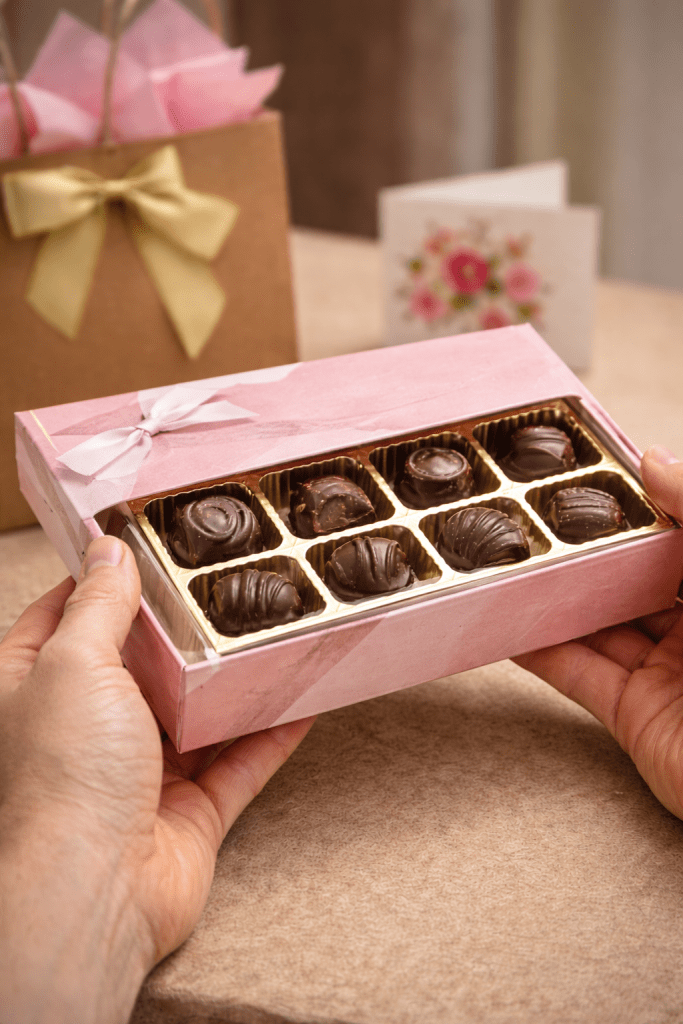
Interior layout matters as well. When pieces are spaced evenly and held in place, the first view inside feels organized and thoughtful. Inserts help keep each candy in its own space. No sliding. No crowding. Just clean presentation.

Think about texture too. A soft matte surface can feel elegant. A subtle sheen can catch light without looking flashy. Even without expensive details, a well-chosen finish makes the box feel special.

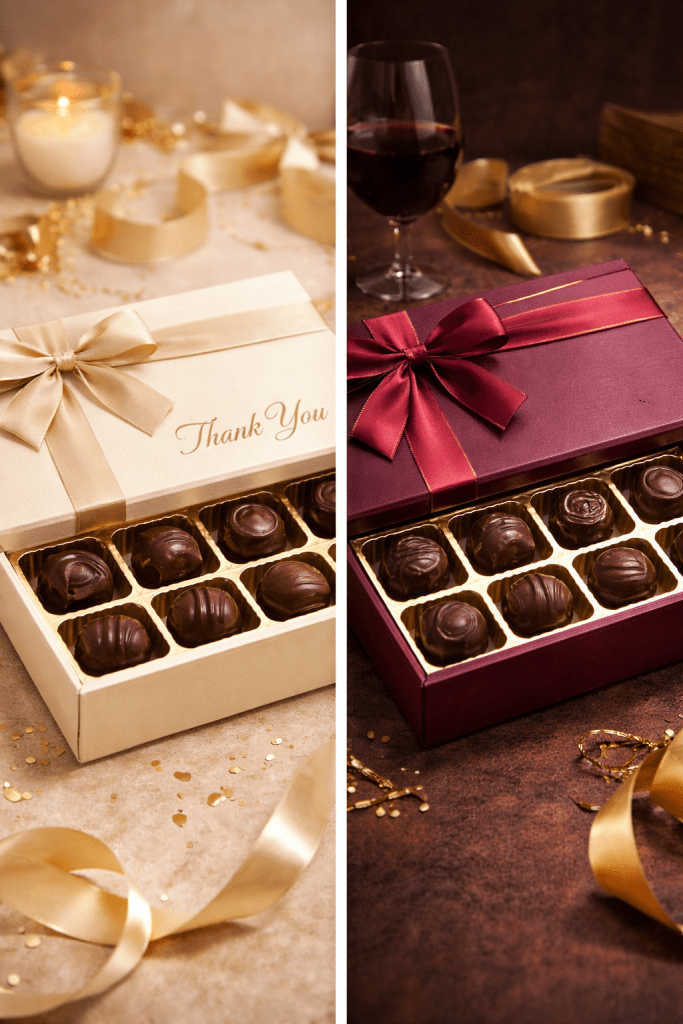
Color choice shapes emotion. Soft creams and warm reds often feel celebratory. Deep tones feel rich and indulgent. The color should match the story your brand wants to tell.

Protection during travel is critical. Gift items are often shipped across states or even countries. Strong candy boxes combined with proper outer packaging prevent crushed lids and cracked pieces. When the product arrives looking perfect, the giver feels proud.

Picture a customer placing your candy on a holiday table. The box stands upright. It looks ready to present. Guests admire it before opening. That small moment turns packaging into part of the celebration.

Ask clear questions when selecting packaging. Will this box hold up during stacking? Does it protect delicate pieces? Does it feel worthy of being handed to someone special? Does it match the price point we want to charge?

Gift-worthy packaging supports premium positioning. When the outside feels refined, customers are more comfortable paying for quality.

Candy is often shared during meaningful occasions. Birthdays. Anniversaries. Holidays. The box becomes part of the memory.

When designed thoughtfully, candy boxes elevate simple sweets into something memorable. They transform a purchase into a presentation. And that presentation can be the reason someone chooses your brand again the next time they want to give something special.

Why Presentation Changes Taste

People rarely admit this, but candy tastes different depending on how it is presented. The ingredients do not change, yet the experience does. When candy comes from a box that feels careless, people expect less. When it comes from a box that feels thoughtful, people slow down and enjoy it more. Candy boxes quietly shape those expectations before anyone realizes it.

One question people often ask is why the same candy feels better in one setting than another. The answer is context. Candy handed over loose or poorly boxed feels casual, almost forgettable. Candy placed neatly in a well-fitted box feels deliberate. That sense of intention affects how people approach the first bite. They chew slower. They notice texture. They stay present. The box sets the tone without saying a word.

Another common question is how candy boxes affect gifting. When candy is given as a gift, the box becomes part of the message. A weak box can make the gift feel rushed, even if the candy is high quality. A solid box communicates effort. It says someone planned ahead. It says the moment mattered. That message lands before the box is opened, and it colors everything that follows.

People also ask how to avoid candy feeling “store bought” in a bad way. This often comes down to spacing and structure. When candy is crammed together, it feels mass-produced. When pieces have room and sit evenly, they feel selected. A box that supports that layout helps candy feel curated instead of dumped. That distinction matters, especially when candy is used for events or special occasions.

Another issue is how long candy stays appealing once opened. Some boxes look good for the first few seconds, then fall apart as soon as someone takes a piece. Gaps form. Candy tips over. The display feels unfinished. Boxes designed to hold their shape even as candy is removed keep the experience pleasant from start to finish. That consistency helps candy stay inviting instead of slowly losing appeal.

People also think about cleanliness, even if they do not say it directly. Candy that slides around feels touched, even when it is not. Boxes that keep candy in place reduce that perception. Each piece feels separate and fresh. That feeling matters more in shared spaces, where many hands are nearby. A box that maintains order helps people feel comfortable taking part.

There is also growing interest in packaging that feels sensible after use. Candy boxes that can be flattened, reused, or easily recycled leave a better impression than those that feel wasteful. When packaging feels simple and practical, it does not distract from the candy. It supports the experience instead of competing with it. That balance is important for people who care about what they throw away.

Choosing the right candy box is not about decoration or trends. It is about guiding how people feel from the first glance to the last piece. A good box protects shape, supports order, and signals care. When those elements come together, candy feels better to eat, even if the recipe never changes. Presentation does not just frame the candy. It changes how people experience it.

Can Mixed Flavors Fit in One Box? 

Assorted boxes of candy sound easy until one piece starts affecting another. Mint spreads its scent, soft caramels stick together and nuts leave crumbs. Sellers should ask an important question: can different sweets safely be in the same box together? 

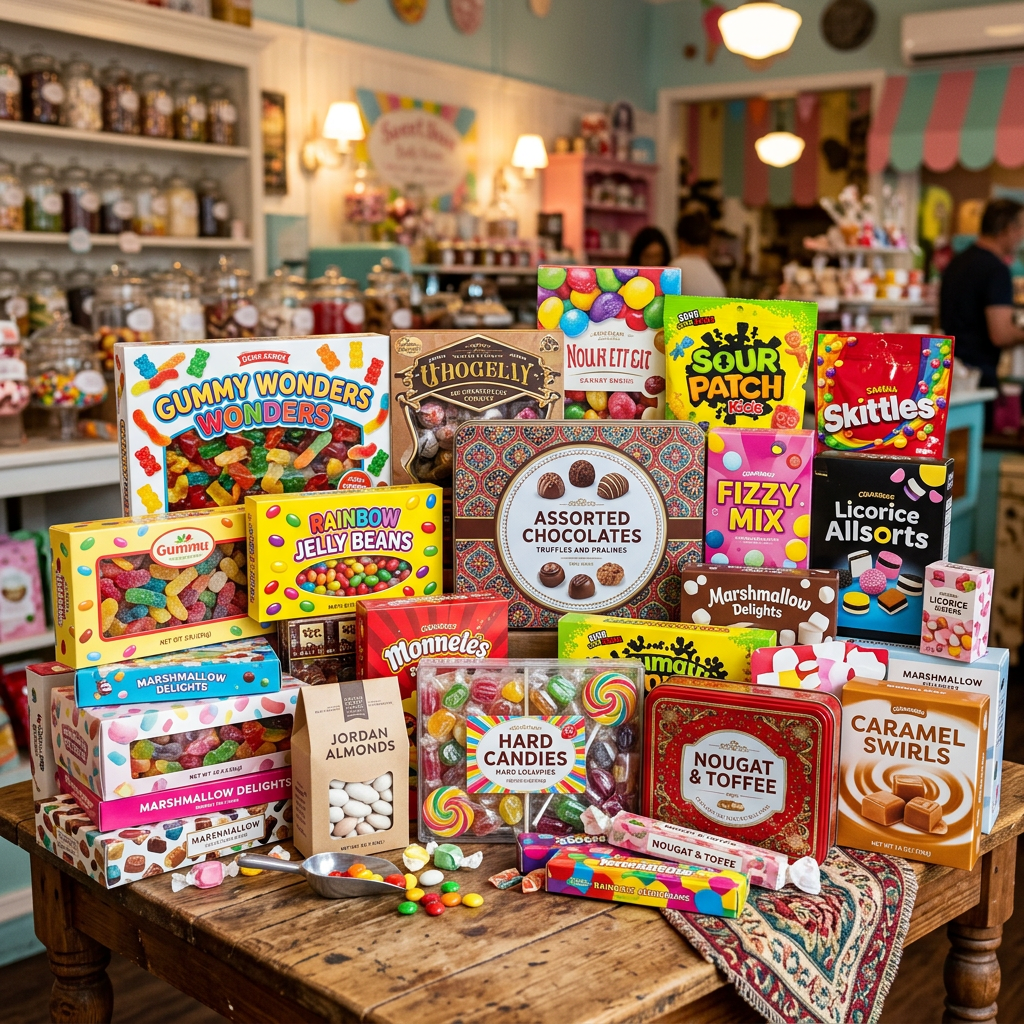
Colorful assortment of boxed candies and sweets displayed on a wooden table
A vibrant assortment of sweets creates a playful candy-shop centerpiece.

Candy boxes can mix fun treats together but each piece needs its own space before closing. Start by sorting treats by smell, texture and filling. Creams that are mild lose their taste next to strong mint or coffee candies. Soft pieces can press hard candies and lose their shape too. Anything that leaks, sheds sugar or breaks into pieces needs extra room. Grouping first shows which sweets get along well together.

Paper cups allow each piece its own space. Workers can lift candy without direct contact too and catch little crumbs. Dividing trays add more space between flavors as well. But cups and walls aren’t impenetrable barriers so they can’t be trusted to block allergens from getting to other things either. 

Allergens leave traces on tools, gloves, tables and packages if candy made with things like peanuts, tree nuts, milk, soy, wheat or other listed allergens. Having dividers inside boxes doesn’t remove that risk either. Follow food rules, use clear labels and consult a food expert if you’re not sure how to proceed correctly.

Order matters during packing. Finish candies with fewer allergens concerns before opening other batches if that fits shop safety plan. Clean work area well between each run. Use clearly marked trays and tools so workers don’t grab the wrong thing during a rush. 

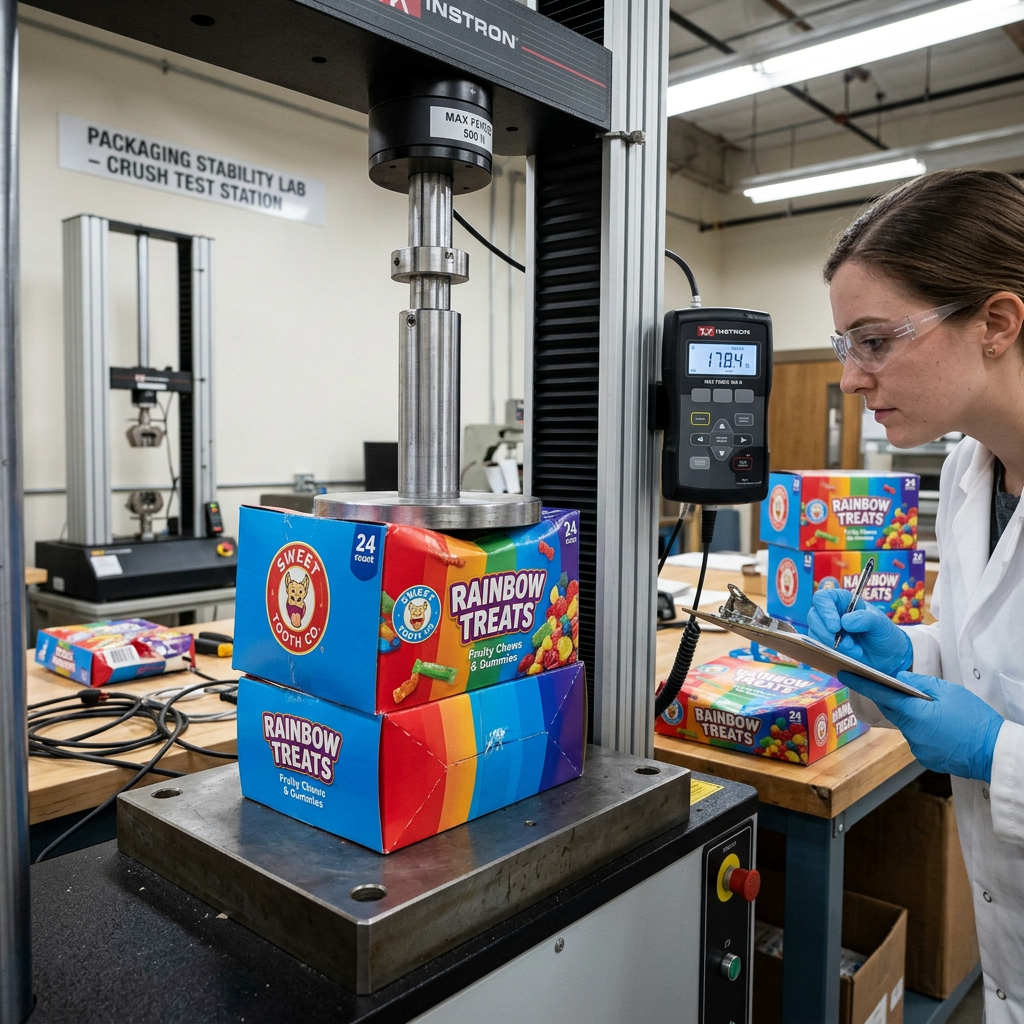
Technician testing stacked Rainbow Treats boxes with a compression machine
A technician evaluates stacked candy boxes in a controlled crush stability test.

Written steps make a safe routine easier to repeat. Next, build a sample box and let it sit. Open it after one day and check if smells have moved, wrappers have loosened or soft centers have leaked. Then test it to see how it performs for as long as a customer might keep the package. Something that looks fine after ten minutes might behave very differently after a few warm days.

A simple map makes treats easier to enjoy. It shows where each flavor is and which pieces contain important allergens. Place this map where buyers can see it before picking a treat. Clear facts eliminate poking, squeezing or guessing and keep remaining candy neat for others too. 

Good boxes of candy do not mix random leftovers together. Instead, they bring flavors that were picked to live together. Thoughtful grouping, careful rules and clear facts help buyers know exactly what they are eating. When each piece has a reason to be there, opening and enjoying the whole box feels easy.

Why Candy Breaks Fast

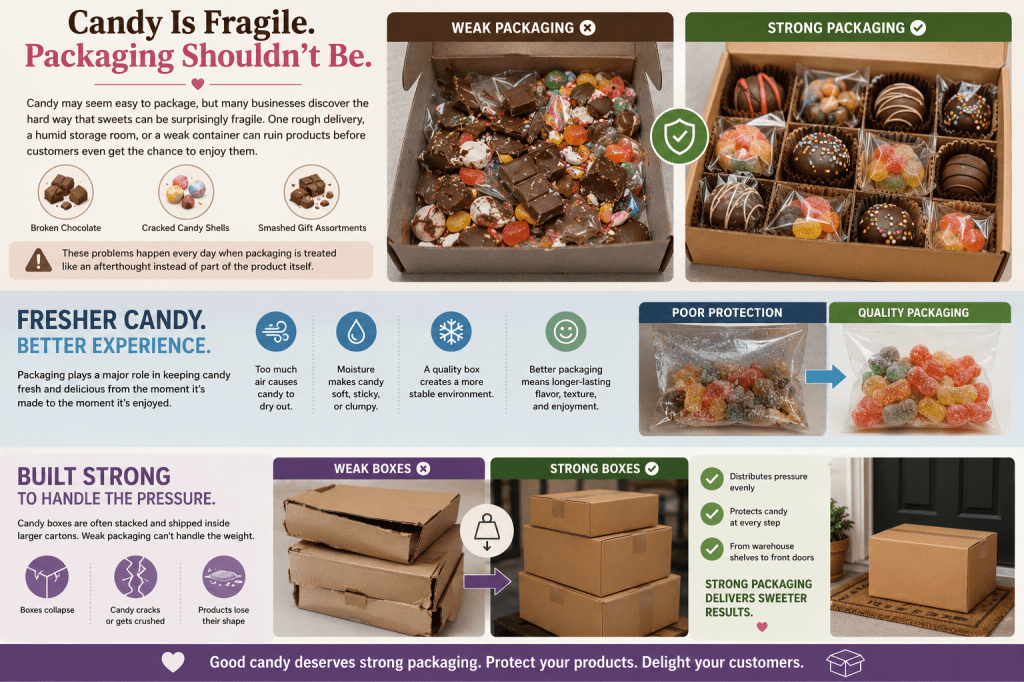
Candy may seem easy to package, but many businesses discover the hard way that sweets can be surprisingly fragile. One rough delivery, a humid storage room, or a weak container can ruin products before customers even get the chance to enjoy them. Broken chocolate, cracked candy shells, and smashed gift assortments are problems that happen every day when packaging is treated like an afterthought instead of part of the product itself.

One question candy sellers often ask is why some products stay fresh longer than others. Packaging plays a major role in that answer. Candy exposed to air too often may dry out, soften, or lose texture faster than expected. Certain treats can even absorb moisture from the environment and become sticky or clumpy. A quality candy box helps create a more stable environment around the product so flavor and texture hold up longer during storage and delivery.

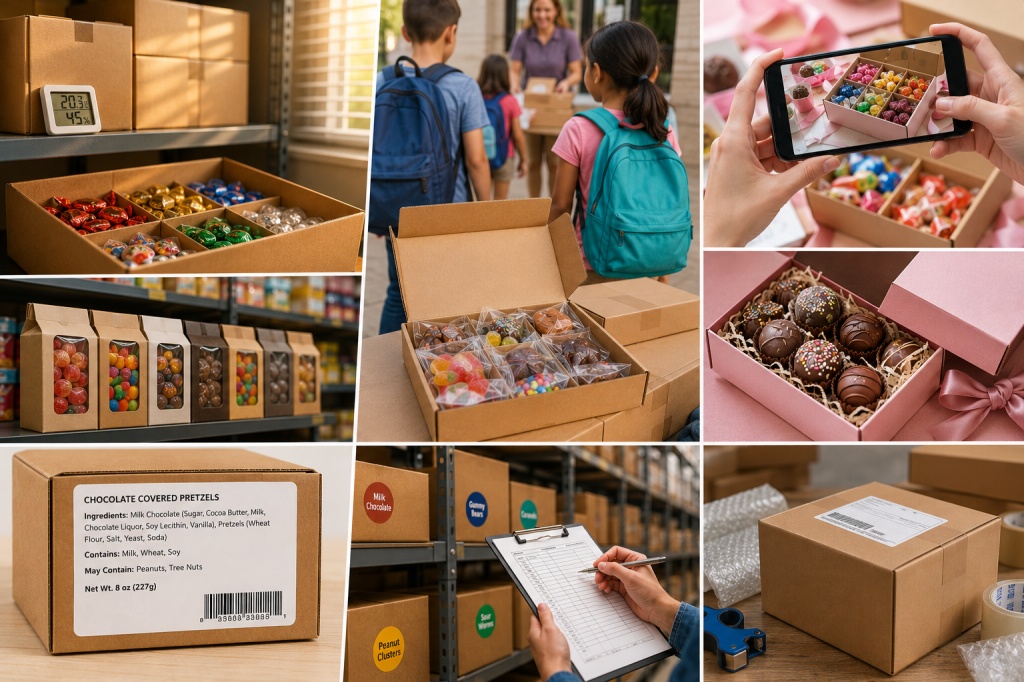
Another issue businesses run into involves stacked shipments. Candy boxes are frequently packed together inside larger cartons during transport. Weak packaging may collapse under weight, causing products underneath to crack or flatten. Stronger boxes help distribute pressure more evenly so candy holds its shape from warehouse shelves to front doors.

Small candy companies also ask how packaging affects online orders. Internet sales have changed how candy moves from seller to buyer. Products may now travel across several states instead of just across town. That longer journey increases the chances of rough handling and temperature changes. Candy boxes designed for shipping can help reduce movement inside packages and protect items from shifting around during transit.

Many customers buy candy for celebrations, which means appearance matters almost as much as taste. Holiday parties, weddings, birthdays, and corporate events often require candy displays that look clean and organized. Neatly packed candy boxes help products arrive looking more polished and professional. People notice when packaging feels secure instead of flimsy or crushed.

Another common question centers around storing candy safely in shops or homes. Heat and sunlight can quickly affect many sweets, especially chocolate products. Proper boxes help shield candy from direct exposure and make storage easier to manage. Organized packaging also helps businesses rotate inventory more efficiently so older products get used before newer stock.

Fundraisers and schools use candy packaging differently than retail stores. In those situations, candy often changes hands many times before being eaten. Children carry products in backpacks, volunteers transport them in vehicles, and organizers stack them during events. Candy boxes help reduce messes and protect products through all those extra steps.

People are also paying closer attention to presentation on social media. Candy businesses often post product photos online, and customers share pictures of gifts or purchases. Packaging that looks neat in photos can help products appear more premium and trustworthy. Even simple candy can seem more valuable when presented inside a clean, sturdy box instead of a wrinkled container.

Another benefit many businesses appreciate is easier labeling. Candy boxes provide clear surfaces for ingredients, flavors, allergy warnings, or branding information. This helps customers quickly understand what they are buying without confusion. Organized labels can also make shelves look cleaner and more professional.

The right candy packaging does far more than hold sweets in place. It helps products survive shipping, protects freshness, improves appearance, supports organization, and creates a better buying experience overall. Customers may come for the candy itself, but strong packaging helps ensure they receive it the way the business intended.