Is your chocolate really worth what you paid for it?

There are Two candy shops which have made the exact same type of chocolate truffle. They each utilize high-quality ingredients. Each candy maker has used an old-fashioned method of making their candies by-hand. The prices charged by each store are approximately equal.

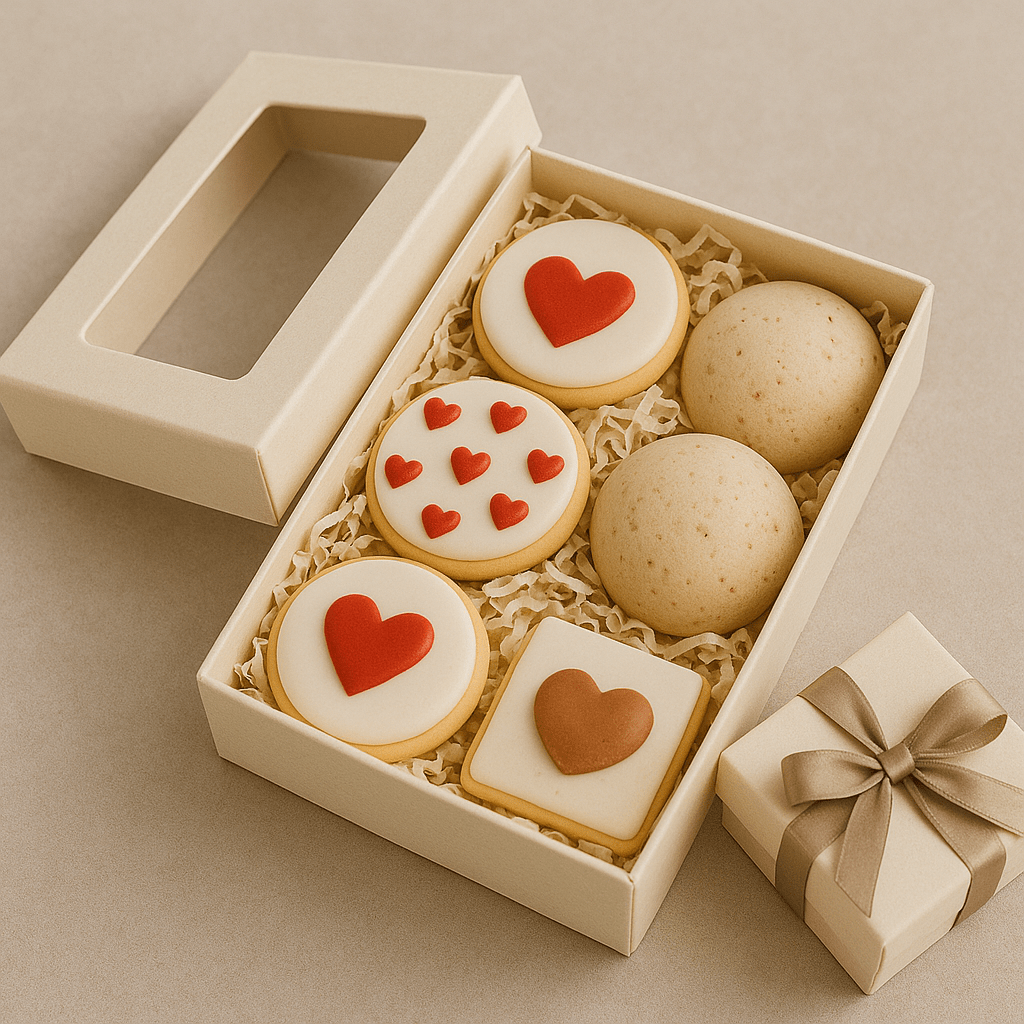
However, one candy store places their chocolate truffles inside a clear plastic bag. The second candy store puts their chocolate truffles in a decorative candy box. Which one do you think you would prefer to give as a gift?

Most individuals will likely select the candy with the box. This is due to the fact that the presentation of your candy can alter how you perceive your purchase (even before consuming).

For instance; let us suppose that you recently purchased some chocolates for someone special. Perhaps it was for a birthday, wedding, or st. Valentine’s Day celebration.

In most instances you likely desired for your chocolate to appear pleasingly appealing prior to the recipient taking their first bite.

That is precisely where candy boxes come into play.

A suitable candy box enables you to convert a relatively simple confectionery into a gift that someone is eager to unwrap.

And for many candy shops, bakeries and small businesses this could be the difference-maker.

Assume you sell 6 chocolate truffles for $12. If you place these same truffles within a plain bag, they may simply be perceived as a fast-food item. However, if you create an arrangement utilizing these same truffles in a neat candy box, customers may perceive them as a meaningful gift.

You did not modify the flavor of the chocolate. You merely altered how you chose to present it.

Obviously, this does not imply you must invest a fortune in premium packaging options. In some cases, a simple candy box will suffice.

The essential factor is selecting a box that complements your confections and allows them to appear neatly arranged. A candy box that is excessively large will cause a modest quantity of confections to appear unappealing. Conversely, a candy box that is too small will cause chocolates to become overcrowded and disorganized.

Neither creates a positive first impression.

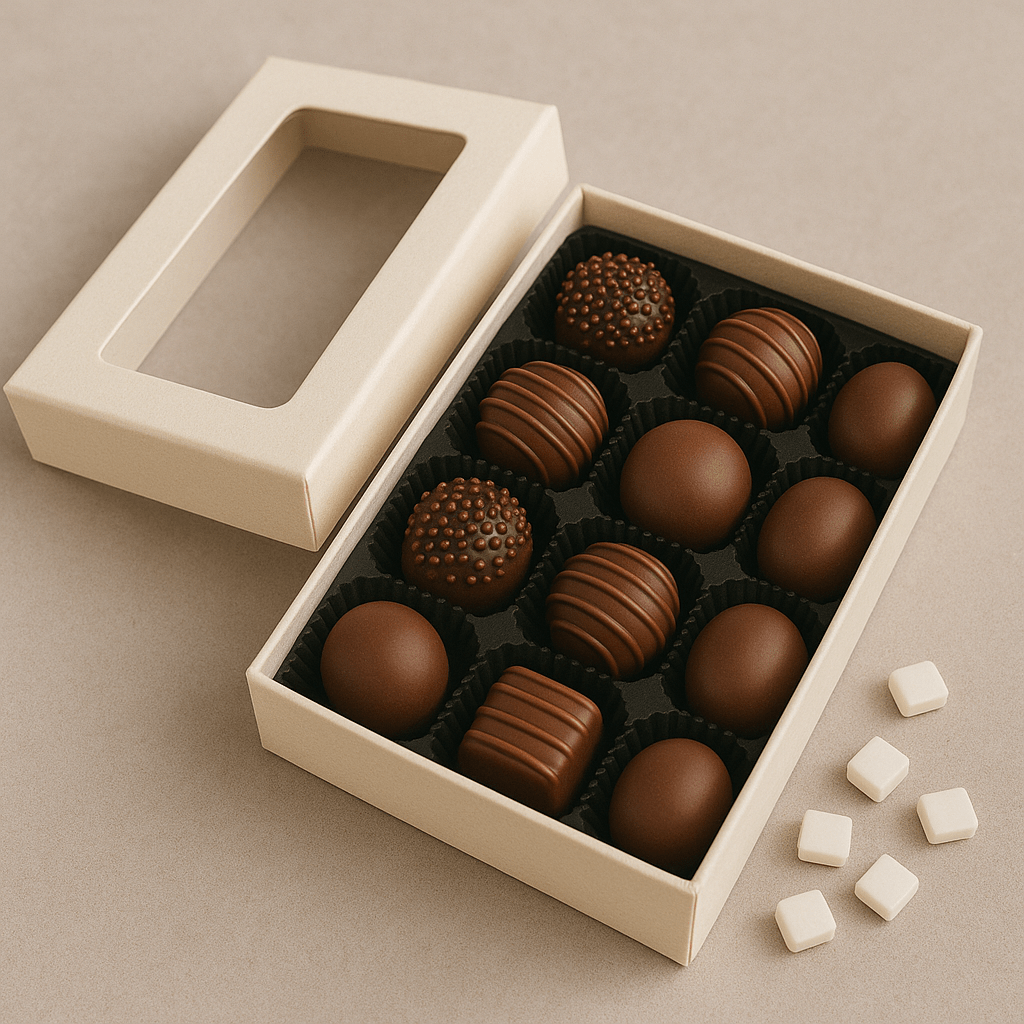
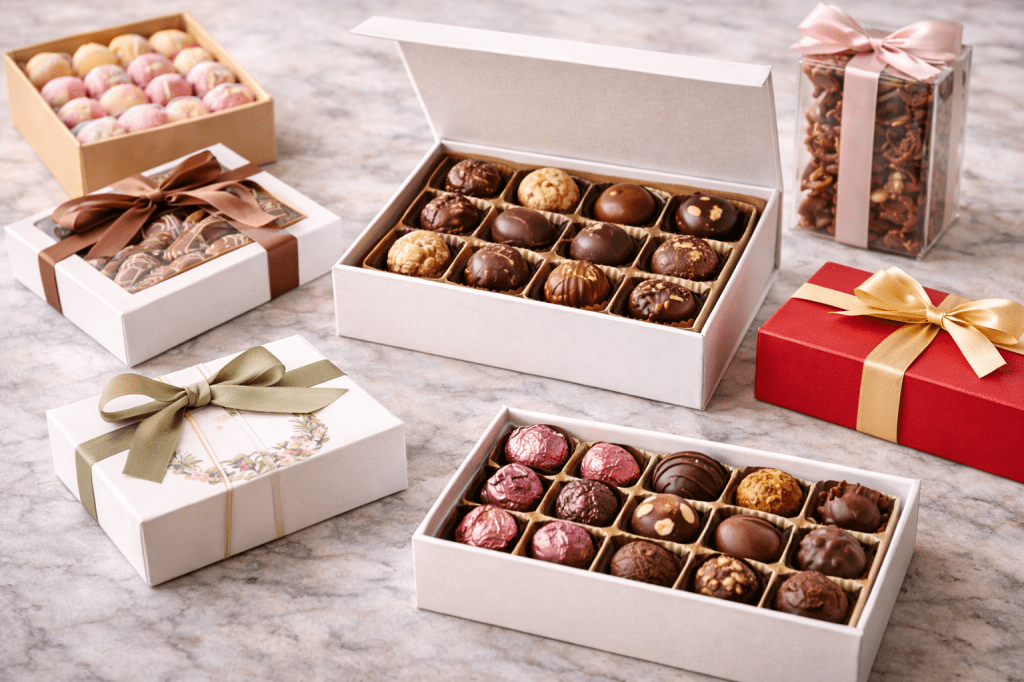
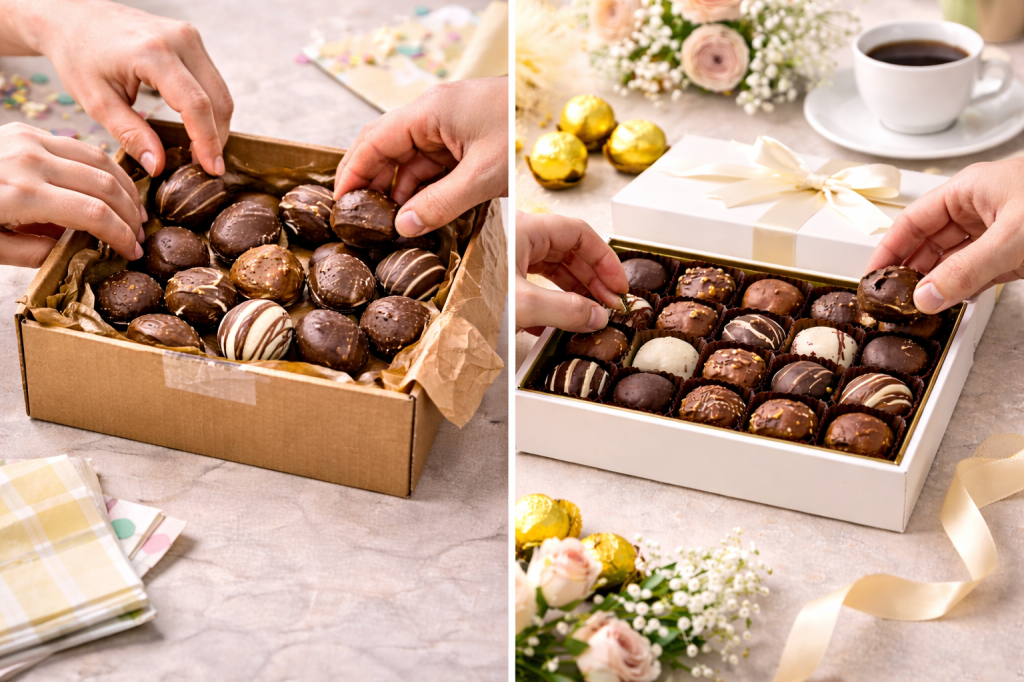
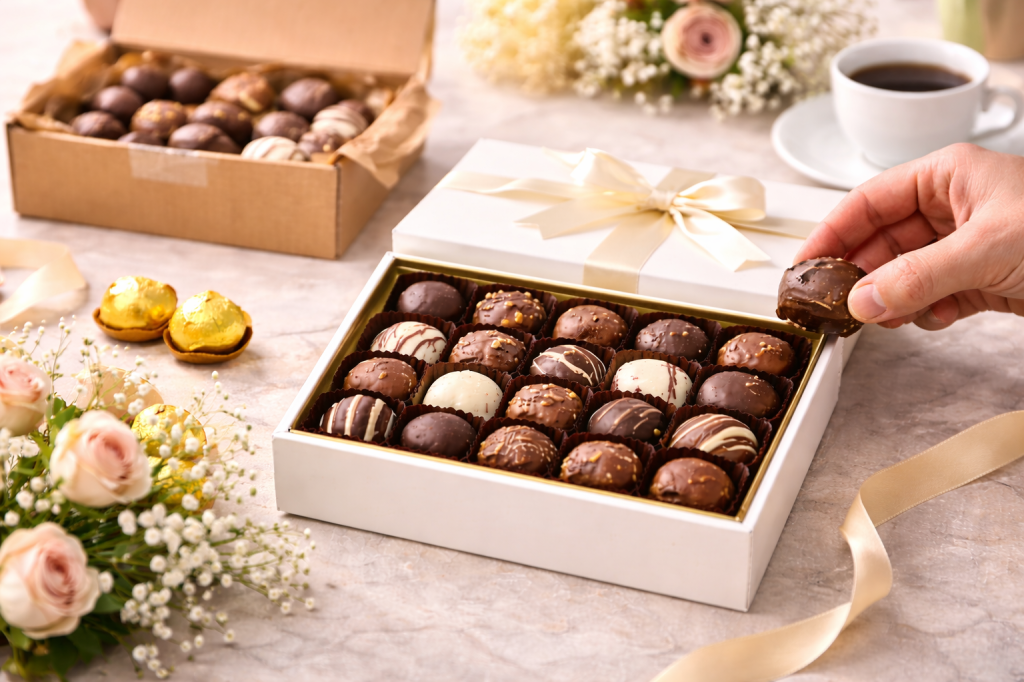
Utilizing candy cups or inserts will enable the individual items to remain in place. Consequently, upon opening the candy box customers will observe a neat array of chocolates as opposed to seeing chocolates randomly scattered throughout the bottom of the container.

Even though it seems minor, such minute details matter significantly when you are selling gifts.

You may also wish to provide various packaging alternatives. You may desire to sell smaller quantities of candy in a small box for customers who desire a straightforward treat and larger gift boxes for birthdays, weddings, etc..

By doing so, you allow consumers more flexibility when purchasing presents without complicating your candy production processes. Furthermore, when an individual requires a rapid gift solution, having pre-made candy boxes available can simplify their selection process at that specific moment.

Packagingsupplies.com offers candy boxes of varying sizes and designs for chocolates, fudge, truffles and other types of sweets.

Good packaging cannot enhance the quality of inferior chocolate. Nevertheless, proper packaging can assist excellent chocolate in being perceived as the exceptional treat that it truly represents.

When customers are shopping for candies to provide as gifts for individuals whom they care about, their initial perception can equate to a considerable sum of money.
Why Presentation Changes Taste

People rarely admit this, but candy tastes different depending on how it is presented. The ingredients do not change, yet the experience does. When candy comes from a box that feels careless, people expect less. When it comes from a box that feels thoughtful, people slow down and enjoy it more. Candy boxes quietly shape those expectations before anyone realizes it.

One question people often ask is why the same candy feels better in one setting than another. The answer is context. Candy handed over loose or poorly boxed feels casual, almost forgettable. Candy placed neatly in a well-fitted box feels deliberate. That sense of intention affects how people approach the first bite. They chew slower. They notice texture. They stay present. The box sets the tone without saying a word.

Another common question is how candy boxes affect gifting. When candy is given as a gift, the box becomes part of the message. A weak box can make the gift feel rushed, even if the candy is high quality. A solid box communicates effort. It says someone planned ahead. It says the moment mattered. That message lands before the box is opened, and it colors everything that follows.

People also ask how to avoid candy feeling “store bought” in a bad way. This often comes down to spacing and structure. When candy is crammed together, it feels mass-produced. When pieces have room and sit evenly, they feel selected. A box that supports that layout helps candy feel curated instead of dumped. That distinction matters, especially when candy is used for events or special occasions.

Another issue is how long candy stays appealing once opened. Some boxes look good for the first few seconds, then fall apart as soon as someone takes a piece. Gaps form. Candy tips over. The display feels unfinished. Boxes designed to hold their shape even as candy is removed keep the experience pleasant from start to finish. That consistency helps candy stay inviting instead of slowly losing appeal.

People also think about cleanliness, even if they do not say it directly. Candy that slides around feels touched, even when it is not. Boxes that keep candy in place reduce that perception. Each piece feels separate and fresh. That feeling matters more in shared spaces, where many hands are nearby. A box that maintains order helps people feel comfortable taking part.

There is also growing interest in packaging that feels sensible after use. Candy boxes that can be flattened, reused, or easily recycled leave a better impression than those that feel wasteful. When packaging feels simple and practical, it does not distract from the candy. It supports the experience instead of competing with it. That balance is important for people who care about what they throw away.

Choosing the right candy box is not about decoration or trends. It is about guiding how people feel from the first glance to the last piece. A good box protects shape, supports order, and signals care. When those elements come together, candy feels better to eat, even if the recipe never changes. Presentation does not just frame the candy. It changes how people experience it.

Can Mixed Flavors Fit in One Box? 

Assorted boxes of candy sound easy until one piece starts affecting another. Mint spreads its scent, soft caramels stick together and nuts leave crumbs. Sellers should ask an important question: can different sweets safely be in the same box together? 

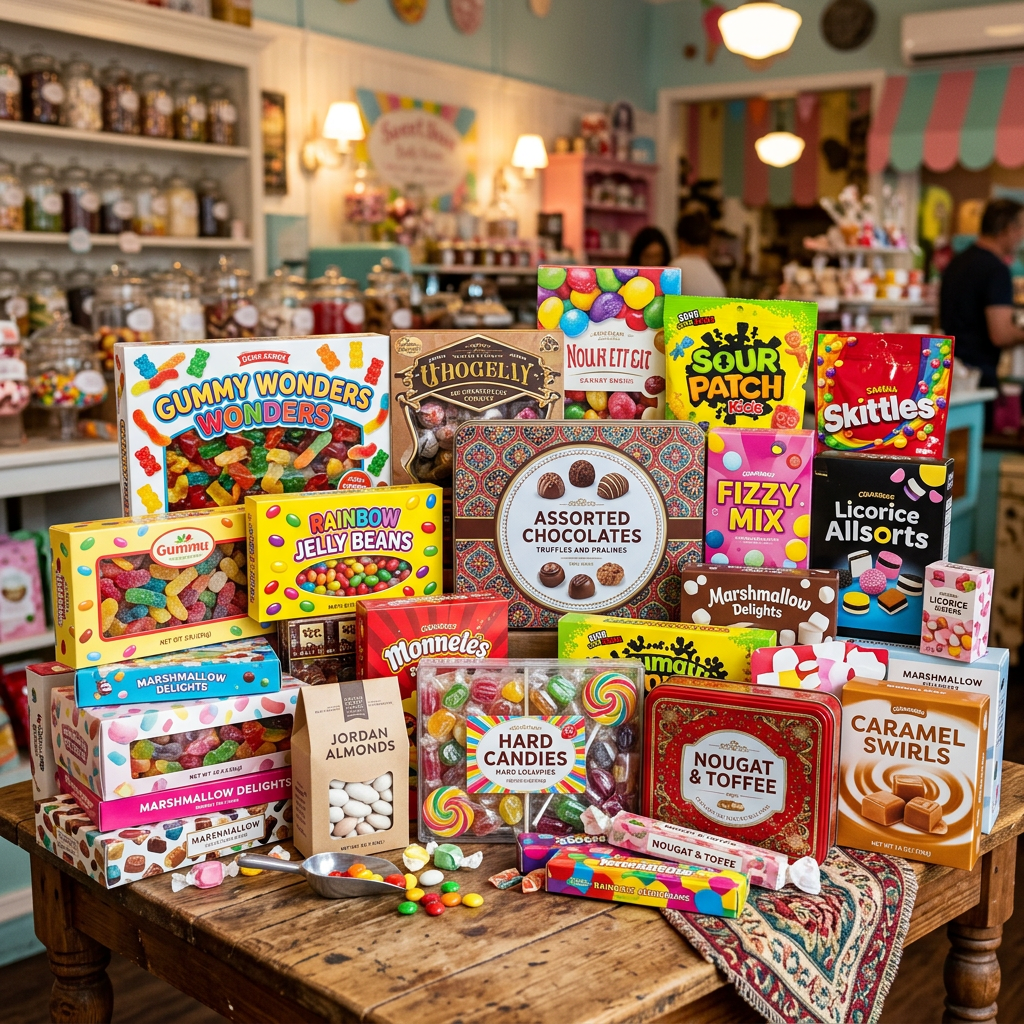
Colorful assortment of boxed candies and sweets displayed on a wooden table
A vibrant assortment of sweets creates a playful candy-shop centerpiece.

Candy boxes can mix fun treats together but each piece needs its own space before closing. Start by sorting treats by smell, texture and filling. Creams that are mild lose their taste next to strong mint or coffee candies. Soft pieces can press hard candies and lose their shape too. Anything that leaks, sheds sugar or breaks into pieces needs extra room. Grouping first shows which sweets get along well together.

Paper cups allow each piece its own space. Workers can lift candy without direct contact too and catch little crumbs. Dividing trays add more space between flavors as well. But cups and walls aren’t impenetrable barriers so they can’t be trusted to block allergens from getting to other things either. 

Allergens leave traces on tools, gloves, tables and packages if candy made with things like peanuts, tree nuts, milk, soy, wheat or other listed allergens. Having dividers inside boxes doesn’t remove that risk either. Follow food rules, use clear labels and consult a food expert if you’re not sure how to proceed correctly.

Order matters during packing. Finish candies with fewer allergens concerns before opening other batches if that fits shop safety plan. Clean work area well between each run. Use clearly marked trays and tools so workers don’t grab the wrong thing during a rush. 

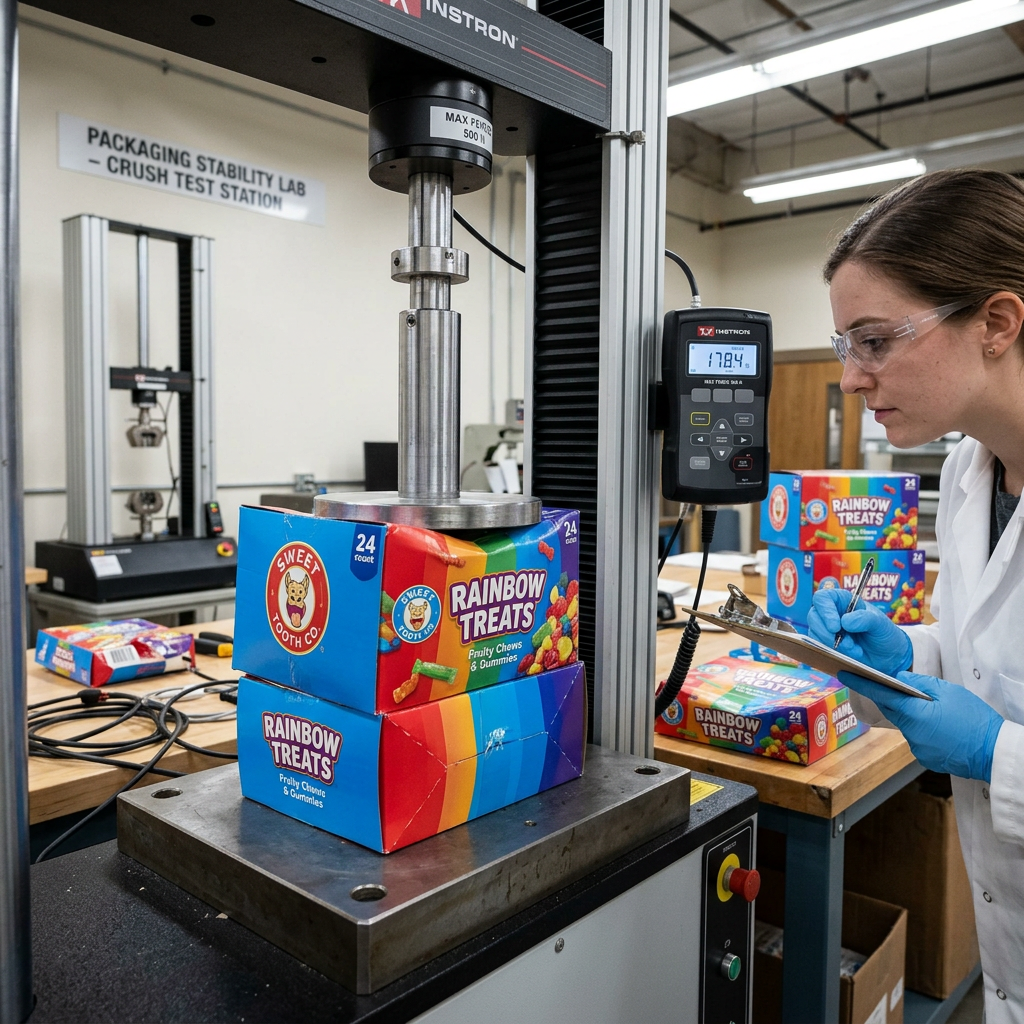
Technician testing stacked Rainbow Treats boxes with a compression machine
A technician evaluates stacked candy boxes in a controlled crush stability test.

Written steps make a safe routine easier to repeat. Next, build a sample box and let it sit. Open it after one day and check if smells have moved, wrappers have loosened or soft centers have leaked. Then test it to see how it performs for as long as a customer might keep the package. Something that looks fine after ten minutes might behave very differently after a few warm days.

A simple map makes treats easier to enjoy. It shows where each flavor is and which pieces contain important allergens. Place this map where buyers can see it before picking a treat. Clear facts eliminate poking, squeezing or guessing and keep remaining candy neat for others too. 

Good boxes of candy do not mix random leftovers together. Instead, they bring flavors that were picked to live together. Thoughtful grouping, careful rules and clear facts help buyers know exactly what they are eating. When each piece has a reason to be there, opening and enjoying the whole box feels easy.

Unlocking the Versatility and Presentation Power of Modern Candy Boxes

Candy boxes are one of the most versatile and customer-pleasing packaging options available to retailers, gift shops, bakeries, and specialty brands. While the name suggests they are just for sweets, today’s candy boxes have expanded far beyond chocolates and truffles. They have become a practical, aesthetically appealing solution for showcasing small products, elevating brand presentation, and improving the overall customer experience. Candy boxes play a meaningful role in how businesses package their items, and understanding how to use them well can enhance both product protection and the perceived value of what’s inside.

One of the strongest benefits of candy boxes is their visual appeal. The clean lines, sharp edges, and structured feel make them naturally suited for products that customers want to display, give as gifts, or enjoy as an indulgent treat. Many customers shop with their eyes first, and candy boxes give businesses an easy way to catch that attention. The ability to choose colors, lid styles, and box shapes lets brands create packaging that reflects their personality. A candy store may choose bright colors and window-front boxes that show off an assortment of truffles, while a luxury boutique might prefer muted tones or a clear-lid candy box for small accessories or favors. The flexibility means candy boxes can fit into nearly any style of branding.

Another key advantage is the product protection candy boxes offer. Even though they are lightweight, their structure keeps delicate items from being crushed or shifting during transport. Small baked goods, caramel squares, handmade soaps, bath melts, mints, and jewelry can all benefit from the snug, supported environment a candy box provides. Candy boxes are designed to stay firm while still being easy to open, meaning customers get a satisfying unboxing experience without struggling to access the contents. This combination of protection and convenience makes candy boxes a dependable everyday packaging option.

Candy boxes also help businesses simplify their inventory because they can be used for multiple product categories. Instead of stocking deep trays, specialty inserts, and various custom packaging shapes, candy boxes can step in as a multi-purpose solution that covers a wide variety of small goods. Their stackability saves back-room storage space and makes it easier for employees to organize supplies. When packaging is simple to manage, operational efficiency naturally improves.

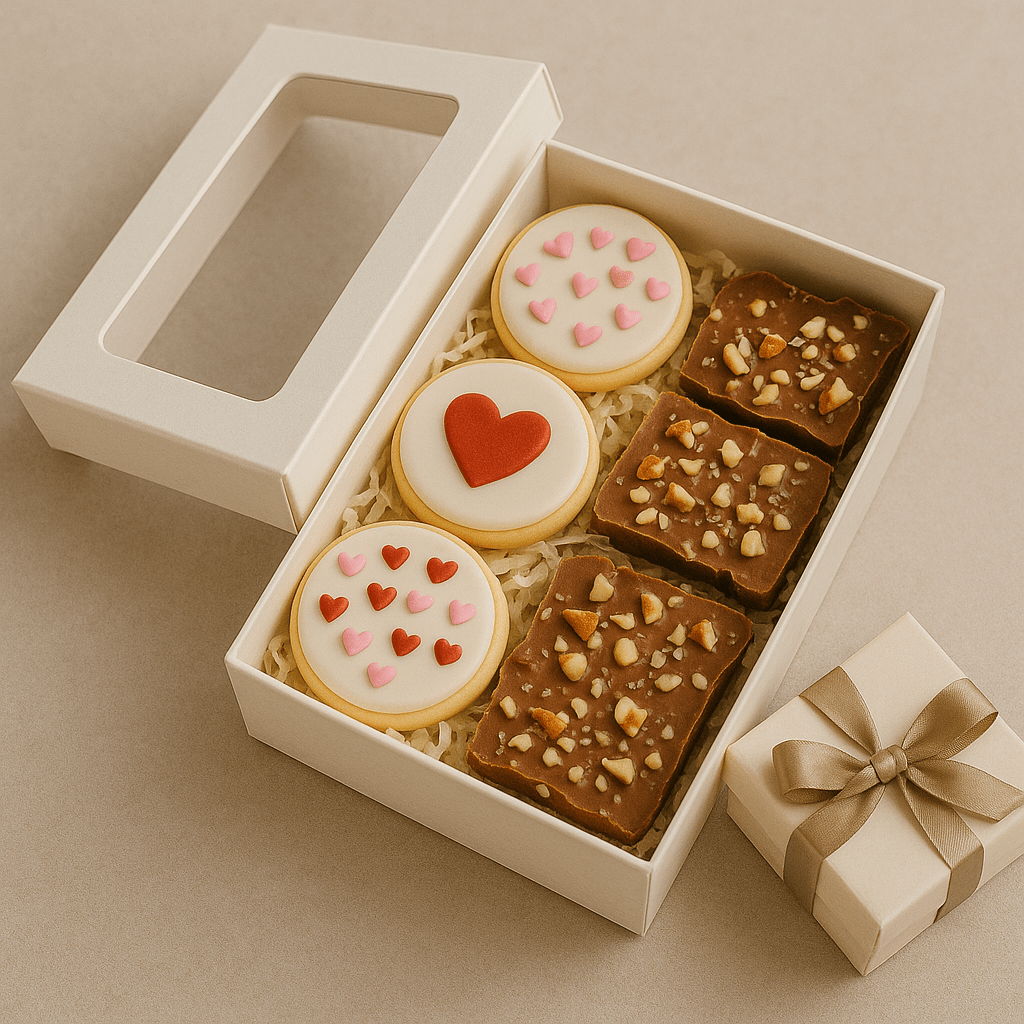
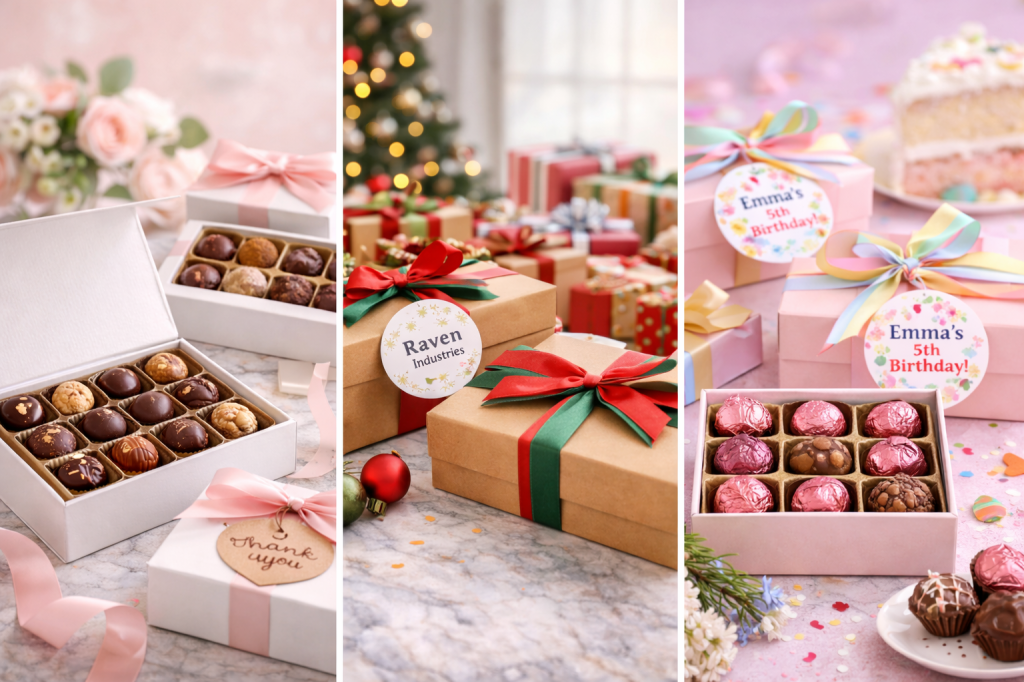
For businesses offering seasonal products, gift sets, or limited-edition items, candy boxes are particularly useful. They can be dressed up with ribbons, branded stickers, custom labels, or colored tissue paper to instantly transform into holiday or event-themed packaging. Many companies lean on candy boxes during busy seasons like Valentine’s Day, Mother’s Day, or Christmas because they allow fast assembly while still delivering a polished, premium look. Having a reliable packaging choice that can be quickly customized for any event helps businesses stay efficient during high-traffic periods.

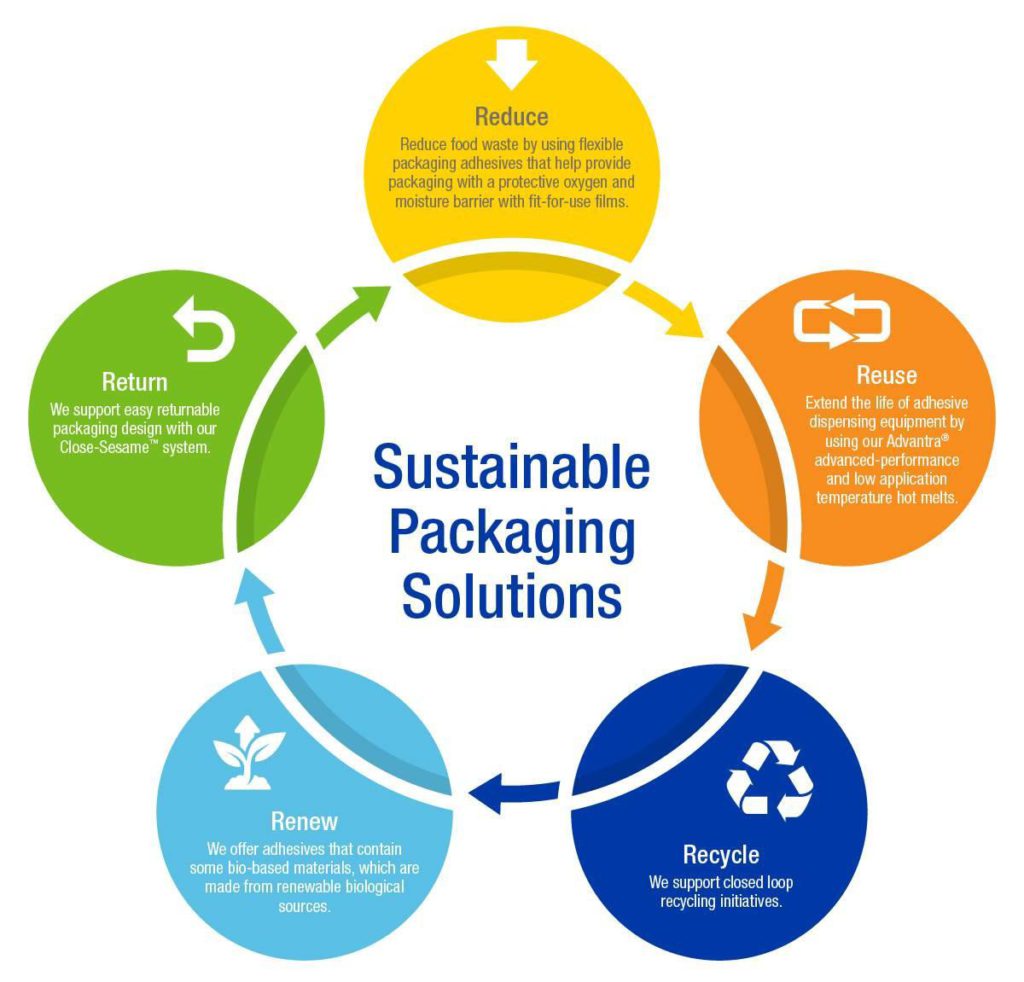
Environmentally conscious customers also appreciate recyclable candy boxes. Many are made from paperboard, which is widely recyclable and a preferred material for customers who want packaging that feels responsible without sacrificing aesthetics. By choosing recyclable candy boxes, businesses can support sustainability goals and appeal to buyers who care about minimizing waste.

Overall, candy boxes continue to be a valuable packaging tool for any business that needs a balance of visual appeal, product protection, and practicality. Their ability to elevate presentation while remaining functional and cost-effective makes them a strong choice for retailers of all sizes. As customer expectations rise and presentation becomes a larger part of the shopping experience, candy boxes help businesses deliver packaging that reflects care, attention to detail, and polished branding.

Why Candy Breaks Fast

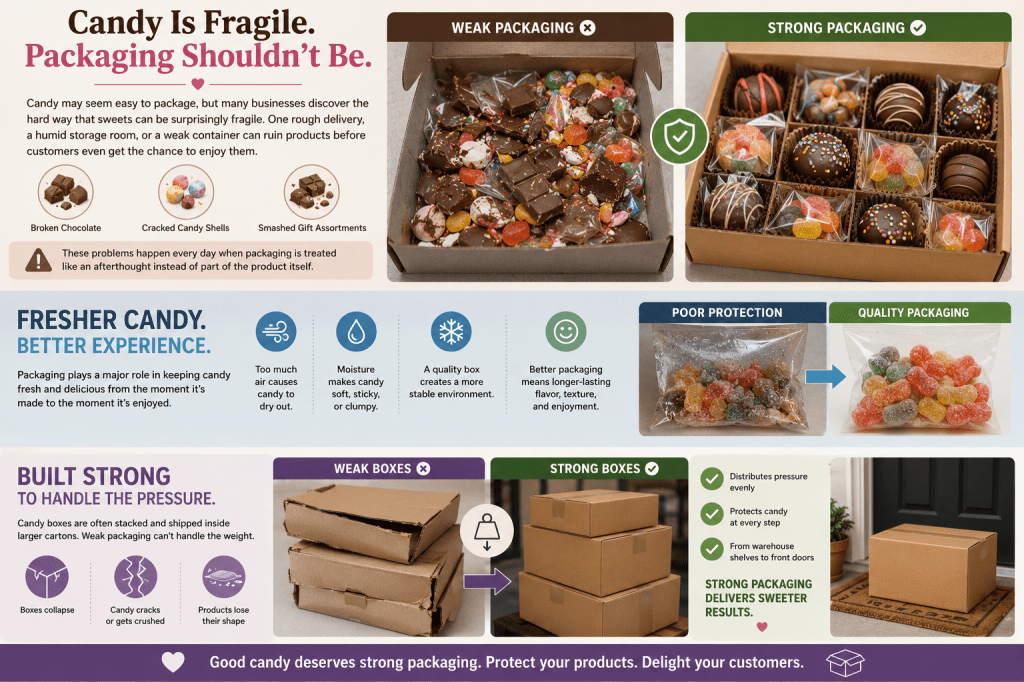
Candy may seem easy to package, but many businesses discover the hard way that sweets can be surprisingly fragile. One rough delivery, a humid storage room, or a weak container can ruin products before customers even get the chance to enjoy them. Broken chocolate, cracked candy shells, and smashed gift assortments are problems that happen every day when packaging is treated like an afterthought instead of part of the product itself.

One question candy sellers often ask is why some products stay fresh longer than others. Packaging plays a major role in that answer. Candy exposed to air too often may dry out, soften, or lose texture faster than expected. Certain treats can even absorb moisture from the environment and become sticky or clumpy. A quality candy box helps create a more stable environment around the product so flavor and texture hold up longer during storage and delivery.

Another issue businesses run into involves stacked shipments. Candy boxes are frequently packed together inside larger cartons during transport. Weak packaging may collapse under weight, causing products underneath to crack or flatten. Stronger boxes help distribute pressure more evenly so candy holds its shape from warehouse shelves to front doors.

Small candy companies also ask how packaging affects online orders. Internet sales have changed how candy moves from seller to buyer. Products may now travel across several states instead of just across town. That longer journey increases the chances of rough handling and temperature changes. Candy boxes designed for shipping can help reduce movement inside packages and protect items from shifting around during transit.

Many customers buy candy for celebrations, which means appearance matters almost as much as taste. Holiday parties, weddings, birthdays, and corporate events often require candy displays that look clean and organized. Neatly packed candy boxes help products arrive looking more polished and professional. People notice when packaging feels secure instead of flimsy or crushed.

Another common question centers around storing candy safely in shops or homes. Heat and sunlight can quickly affect many sweets, especially chocolate products. Proper boxes help shield candy from direct exposure and make storage easier to manage. Organized packaging also helps businesses rotate inventory more efficiently so older products get used before newer stock.

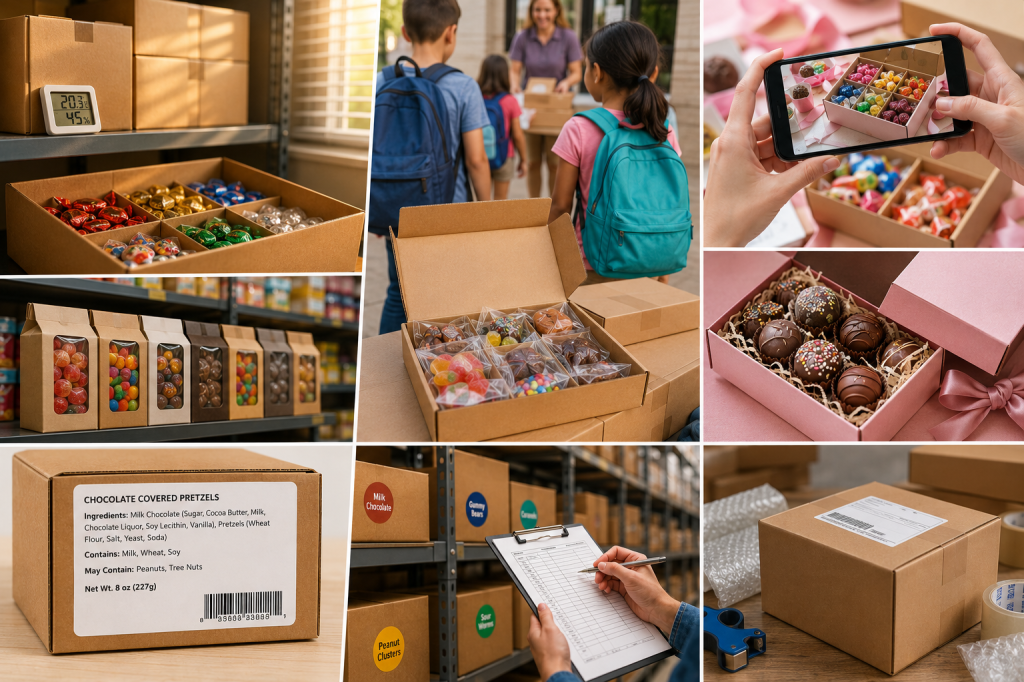
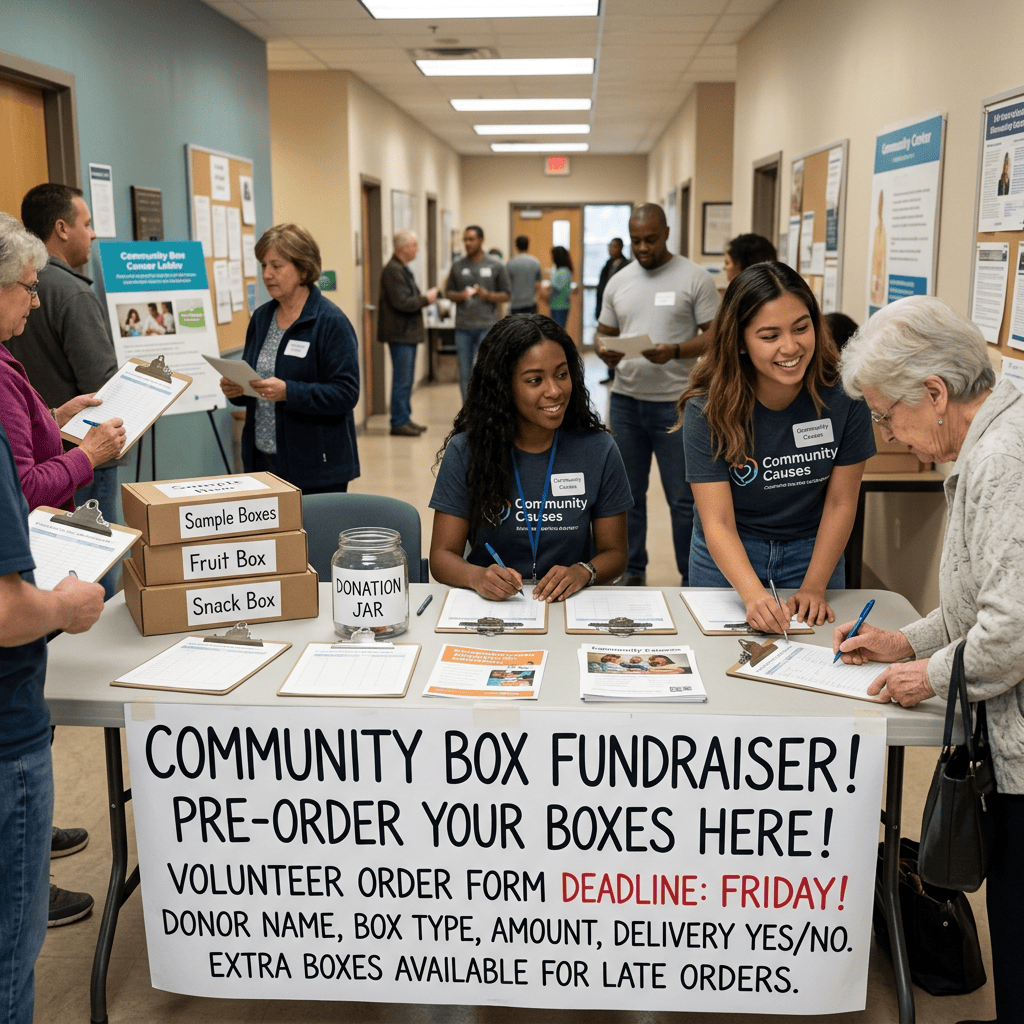
Fundraisers and schools use candy packaging differently than retail stores. In those situations, candy often changes hands many times before being eaten. Children carry products in backpacks, volunteers transport them in vehicles, and organizers stack them during events. Candy boxes help reduce messes and protect products through all those extra steps.

People are also paying closer attention to presentation on social media. Candy businesses often post product photos online, and customers share pictures of gifts or purchases. Packaging that looks neat in photos can help products appear more premium and trustworthy. Even simple candy can seem more valuable when presented inside a clean, sturdy box instead of a wrinkled container.

Another benefit many businesses appreciate is easier labeling. Candy boxes provide clear surfaces for ingredients, flavors, allergy warnings, or branding information. This helps customers quickly understand what they are buying without confusion. Organized labels can also make shelves look cleaner and more professional.

The right candy packaging does far more than hold sweets in place. It helps products survive shipping, protects freshness, improves appearance, supports organization, and creates a better buying experience overall. Customers may come for the candy itself, but strong packaging helps ensure they receive it the way the business intended.

Emerging Technologies in Biodegradable packaging 

Biodegradable packaging is one of the best types of new packaging, used to help with reducing the overall waste that you have going on. with so many different and unique changes to your packaging, it makes sense that more people are jumping on his train. 

It’s a fun, immersive way to reduce the waste that your company puts out. best of all, most of the biodegradable forms of packaging allow for customers to toss this in a seamless manner.

There are common ones such as cardboard and paper products that are biodegradable packaging, but some of the new ones include seaweed, cornstarch, bamboo, packing peanuts made from these materials, cellulose, and even mushrooms! All of these types of packaging are simple to break down, reducing the carbon footprint, and making your brand footprint even better. 

The most Common Biodegradable Packaging Options 

Most of the time, the goal of biodegradable packaging is for it to break down and stay broken down. 

There are plant-based plastics, which in turn are simple materials that will ultimately be the best option for breaking down plastics.   Naturally made from plants, they are plastics that will in turn break down when tossed in landfills.

The most common is paper and cardboard, both unique alternatives to the normal types of packaging options that are out there. Most people like this type of packaging material because it’s cheaper than the alternatives.

One that’s recently come up is edible packaging. Used with food products, they are a packaging that you can eat when you’re done with the product. Seaweed is a common type of edible packaging that you see from these types of packaging options. 

Challenges and benefits 

There are plenty of benefits that come with this type of packaging.

The first and most common is that the environmental impact is far lessened by biodegradable products.   When you toss it, it will break down, sometimes within a few months. In contrast, most of the other types of packaging may take decades, or centuries to break down, and this leads to more landfill waste. 

With biodegradable packaging, you’re able to prevent this from being a problem over time, and it can cause a lot less headaches for those who care about the environment, and it’s far better than other types of packaging that’s out there

But the problem with this packaging is the production. You need to make sure that it’s sustainable in production, because otherwise, you’re expending energy that you might not have. This ultimately creates a lot of problems as well for those who are looking to improve their production capabilities that are there as well.

The costs are another major part of this too. Some companies notice this immediately, because they may cost far more than their current packaging options. While the long-term benefits outweigh the costs, many people need to also factor in whether they can pay for the upfront costs of this, without having to sacrifice the packaging quality or raising costs.

Shelf life is the final option.   While this type of packaging is good, it does break down.   In some cases, this may compromise the products that are on the shelves, and ultimately create a problem. 

With many of these unique types of packaging though, there are now new additives. Sensors to tell you the freshness of your item for example, is quite common. We plan to see a lot of different emerging technologies.

Biodegradable packaging is very popular for brands, and it offers a lot of great benefits for those looking for the ultimate in their packaging experience for products. 

Should Candy Boxes Go Cold?

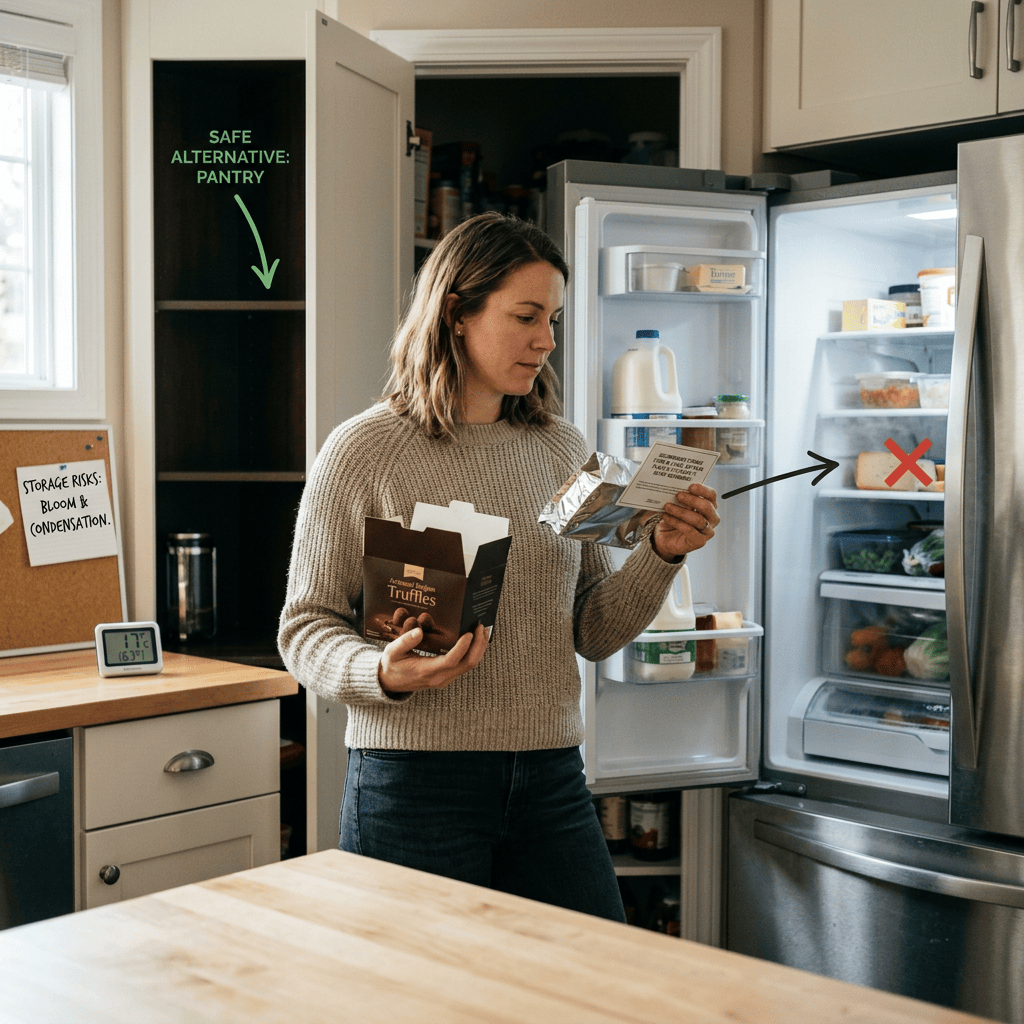
Chocolate candies can often appear as if they belong in the refrigerator. While cold temperatures provide one safe option, they also come with potential risks. Prior to placing a candy box in the refrigerator, check the contents of the box, check the recommended storage instructions provided by the manufacturer, and consider an alternative location within your home.

Woman holding truffles and packaged food beside open refrigerator; text reads “SAFE ALTERNATIVE: PANTRY” and “STORAGE RISK: BLOOM & CONDENSATION.”
A shopper compares chocolate storage choices beside an open refrigerator and pantry.

In most cases, chocolate candies will store best in a cool, dry area protected from direct sunlight. Pantries or cabinets may provide suitable locations for storing chocolate candies, providing you keep them away from heat sources (such as ovens), dishwashers, and direct sun exposure. In addition, maintaining steady room temperatures is generally gentler on chocolates than constantly transferring them between warmer and colder environments.

Refrigerators hold significantly more humidity than consumers realize. As a result of this increased moisture content, when a cold box moves into a warmer environment, small droplets of condensation may form on the chocolate. Those droplets of water can cause the sugar present on the candy’s surface to become dislodged and migrate to the surface creating “sugar bloom.” Additionally, the candy may lose some of its appearance even though it has been stored properly to preserve it.

Odors represent another risk. Chocolates are capable of absorbing the aromas from other foods such as onion, cheese, fish or other foods with strong odors. Paper used for candy packaging typically does little to block these odor-causing molecules. While using a tightly closing top can assist in blocking many of these odors, it cannot guarantee a complete seal at all edges.

Candies containing fillings that include ingredients susceptible to spoilage require special consideration. For example, truffles made with heavy cream, fresh fruits or other perishable ingredients may require cold storage. Follow the manufacturer’s recommendations and/or follow specific guidelines provided in the recipe for proper storage.

Do not assume that all candy packaging presents identical storage requirements. For instance, a solid piece of candy and a piece of candy with a perishable filling do not share identical storage requirements.

If your home becomes excessively warm and you wish to prevent your chocolate from melting, refrigerating your candy may be preferable to allowing it to melt. However, before placing it in the refrigerator, please place the closed candy box inside an additional airtight plastic bag or container. Also, please ensure you position the plastic bag/box away from any foods that produce strong odors. The additional layer of protection provides both an added barrier against humid air and provides another protective layer against odors.

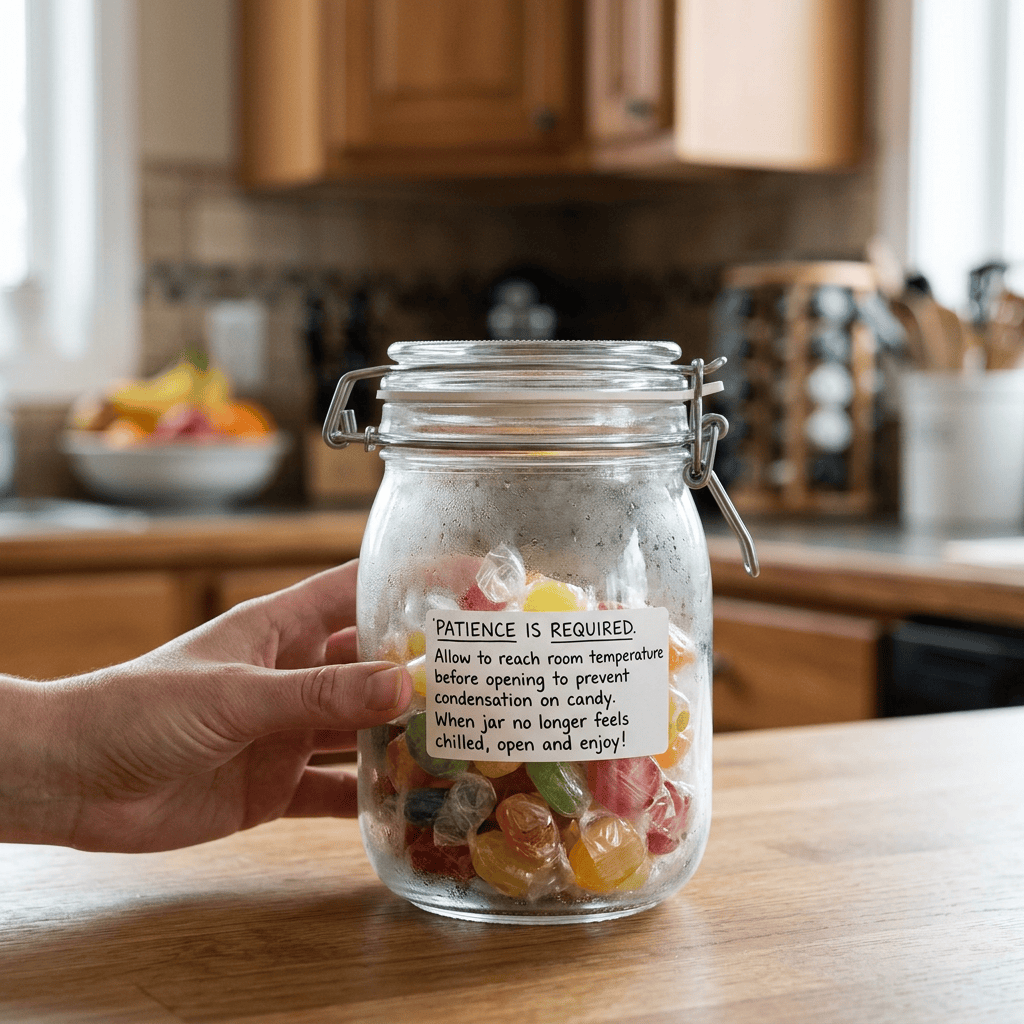
Hand holding candy jar labeled “PATIENCE IS REQUIRED. Allow to reach room temperature before opening to prevent condensation on candy. When jar no longer feels chilled, open and enjoy!”
A hand holds a jar of colorful candies labeled with instructions to let them reach room temperature before opening.

Patience is required when removing the candy from storage. Please allow the sealed container to remain closed until the interior temperature of the container has reached room temperature. If opened prematurely, warm moist air will come into contact with the previously chilled candy causing condensation to occur on its surface. Once the candy appears to be at room temperature (the container is no longer feeling chilled), open the container and enjoy your candy.

Retailers and gift-givers should also take into account the time and conditions experienced during transport/storage. For example, leaving a chilled candy box in a vehicle parked in a hot climate can quickly transform its condition. Consider scheduling delivery/pick-up at cooler hours of the day; utilize a vehicle with good insulation; and advise the recipient of the type of storage conditions maintained prior to presentation/gift giving. A brief storage note can help avoid common mistakes associated with gift giving (e.g., placement near windows).

Therefore, the decision regarding whether or not to chill candy packaging is NOT applicable across all types of candy packaging. Always refer to the package directions; select a cool/dry shelf when possible; and utilize the refrigerator only when necessary, due to excessive heat or inclusion of perishable ingredients in the candy’s filling. Proper storage helps maintain the taste, texture and overall enjoyment associated with each piece of candy contained within a box without requiring unnecessary steps.

Make Candy Do Some Good

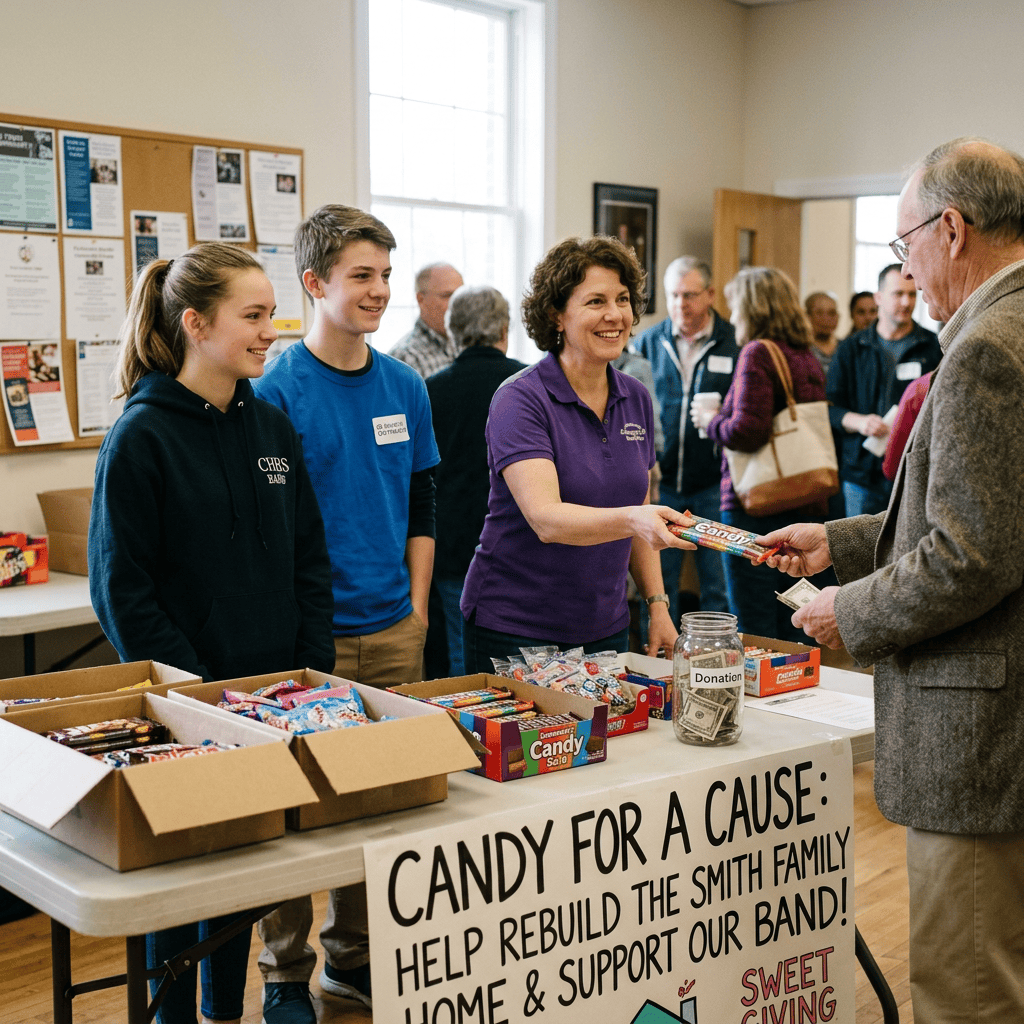
Each group (a school band, a local church wanting to help a family who suffered damage from a fire, etc.) has a genuine need; however, soliciting donations can be difficult. Candy sales allow contributors to enjoy the sweetness of giving back to a good cause.

Step 1: Clearly define one goal. “We want to support our school” is too vague. A defined goal like “We want to purchase ten new library chairs” helps donors see exactly what their donation will accomplish. Determine how much money you need to raise overall, and decide how much you would like to earn per item sold. This decision will tell you how many candy boxes you must sell.

Volunteers sell candy; sign reads “CANDY FOR A CAUSE: HELP REBUILD THE SMITH FAMILY HOME & SUPPORT OUR BAND! SWEET SWING.”
Volunteers sell candy to help rebuild a family home and support their band.

Limit your choices to three or four options. It is usually less complicated to have fewer selections. For example, consider offering a chocolate box, a fruit candy box, a mixed box and an allergy-safe alternative. Place a clearly labeled ingredient list in each box.

Set the prices for all of your items. When possible, use rounded dollar figures as they are easy to understand and to collect. Calculate the expense of purchasing the candy, packaging materials (boxes), labeling supplies, credit card fees and other incidentals. Then subtract these expenses from the sale price of the items. What remains is the net profit which will go toward the cause.

Use pre-orders if possible. Provide each volunteer with either an order sheet or an online order form. Request the donor’s name, type of box they wish to purchase, amount donated and whether delivery is desired. Establish a deadline for ordering supplies based upon your sales. Having a few extra boxes of each variety will enable you to accommodate late customers or minor errors and prevent having too many unused items.

Candy fundraiser pre-order planning

Once you begin packing, establish this as a group activity. Clean off your work surface(s), wash your hands and assign each member of your team a specific duty. Have someone folding cartons while another person is adding candy. Assign a third individual to verify each order against your order sheet and include the customer’s name on the package. The adults should be responsible for monitoring the cash and verifying every completed order prior to handing it over to the customer.

Provide buyers with information about when and where to pick up their purchases. Consider providing a two-hour time frame during regular hours of operation at a school, church or community center. Organize your completed orders by last name prior to the arrival of customers. Prepare a list for yourself and check off each completed order once it is collected.

Share the results of your sale. Report back to your volunteers and let them know how much money was raised and what it will fund. Include a photograph of the new chairs, stocked food shelves, etc. showing the successful completion of the project. Although the candies may disappear within a short period of time (within days) people will continue to recall that their small purchase contributed positively to a local cause.

The Packaging That Makes Every Treat Feel Like a Gift

Candy boxes have a quiet way of transforming simple sweets into something meaningful. A piece of chocolate or a handmade caramel tastes the same no matter what it’s wrapped in—but it feels very different when it’s placed inside a well-designed box. That feeling is what customers buy as much as the candy itself. They’re buying a moment, a presentation, a small gift experience. And the candy box makes that possible.

At the heart of a candy box’s value is presentation. When treats sit in a clean, structured box, they immediately look more appealing. A box organizes the sweets into rows or sections, lifting them up visually. The customer feels like they’re opening something thoughtful. It doesn’t matter if the sweets were made in a high-end chocolatier’s kitchen or a home bakery—the box elevates them. Even a simple kraft or white box can create that effect when it’s folded tightly and closed neatly.

Candy boxes also keep products safe. Chocolate, truffles, dipped items, and soft-textured sweets are all easily damaged. Heat, fingerprints, dust, and pressure can ruin the look long before the candy reaches the customer. A strong candy box shields the treats through storage, display, and transit. That protection preserves not just the candy’s shape, but the joy the customer feels when they finally open the lid.

Shops rely on candy boxes for consistency. Workers can pack boxes quickly because the shape is predictable. The lid closes the same way every time. The size matches the product. This speeds everything up, especially during busy seasons when lines grow and orders stack high. The right candy boxes keep a shop calm and efficient when it matters most.

Portion control is another great advantage. Candy boxes let businesses create standard offerings: four-piece samplers, six-piece gifts, twelve-piece assortments, and so on. This makes buying easier for customers and planning easier for the business. People like options that feel curated and complete, and candy boxes make that possible.

Branding also lives on candy boxes in powerful ways. Even something as simple as a sticker or custom-printed ribbon turns a plain box into a brand statement. Some shops choose bold colors; others choose minimal, clean designs. Window boxes show off decorated chocolates and add visual appeal. Two-piece boxes create a classic “gift opening” moment. There’s a style for every brand personality, and those choices shape how customers remember the shop.

Candy boxes are also used far beyond traditional retail. Event planners use them for favors. Corporate offices use them for holiday gifts. Families use them for birthdays, weddings, or seasonal treats. The box becomes part of the event—something guests remember and sometimes save. A well-made box often outlives the candy itself.

They also help small businesses step into a more professional space. A home baker can go from “homemade treats” to “boutique dessert service” simply by packaging their creations in consistent, clean candy boxes. Customers instantly see the difference. Presentation becomes part of the product story.

The practicality of candy boxes should not be overlooked either. They stack neatly, store easily, and travel well. A shop can keep hundreds of flat-packed boxes ready without taking up much space. And because they’re so simple to assemble, workers don’t waste time fighting awkward packaging.

What makes candy boxes truly special is the emotional lift they give. They make people slow down, open the lid carefully, and enjoy a moment that feels thoughtful. They turn small treats into meaningful gifts. They make celebrations feel a little sweeter. And they help businesses present their products with pride.

Candy boxes do more than hold candy—they elevate it, protect it, and make it memorable. They take something delicious and wrap it in an experience.

How to Design Metaverse Packaging 

The metaverse is in. With a lot of brands ditching just billboards and other signs, preferring a more digital landscape, the metaverse is still a popular area for advertisements.

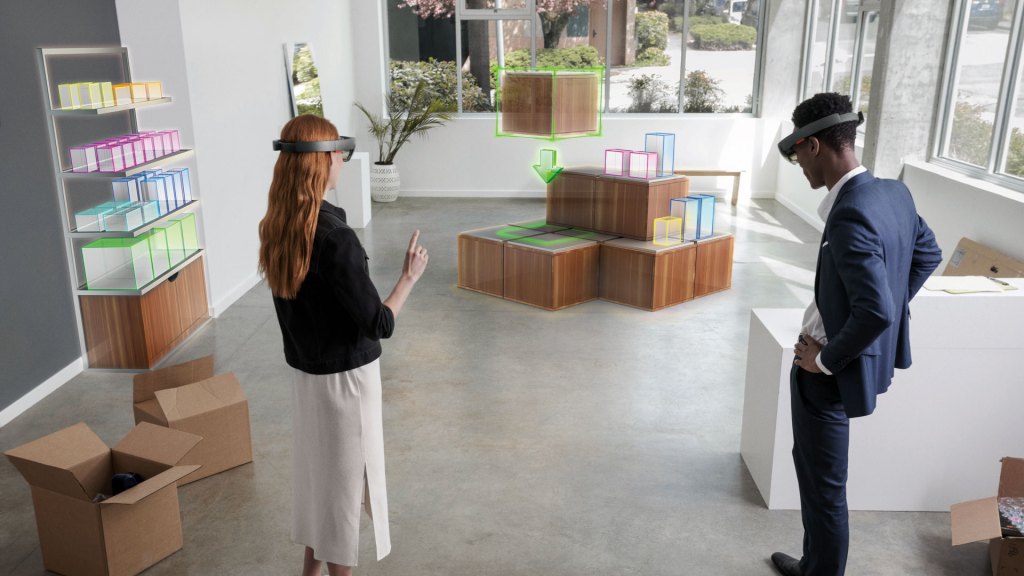
While these days we see these in the digital coins and other times that a lot of companies have mined and minted, there are some unique packaging experiences you can create. Adding a virtual experience is essential, as it will help a lot of brands show off their products before they get to the consumers.

Focusing on the physical world of brick and mortar packaging is good, but you also want to focus on the digital space, especially if you plan to stay ahead of the current trends. 

Virtual Packaging Experiences 

The first thing is to consider virtual packaging experiences. This isn’t just the packaging that you have online, but also utilizing the digital world in order to make this really stand out.

NFTs is an example of this. known as non-fungible tokens, these can be added to an item in order to bolster authenticity. Some of these also come with other perks as well, rather than just mere ownership of something in the digital world. Some companies have started to use NFTs as well to connect to products in the form of digital collectables. 

Digital collectables are products made in the digital world. various toys and stuffed animals can be added as collector items. You can get stickers that you can add in the digital world.   It’s great for some companies, especially since you’re able to add this to your physical packaging for incentives. 

There are also virtual seminars and fashion shows. These product showcases are good for some people who want to show off a new product, whether it’s a fashion item or even just how a new product works.   All set in the digital world, it’s a great option because it lets people attend the events wherever they are, without having to travel anywhere. 

Making the Physical Connect with the digital 

Once you have this set up, you can connect this to the real world, with virtual counterparts. Having them buy a physical item may get them an NFT for example.

It might seem simple, but it’s effective.   While the metaverse is still growing, it does have a unique connection, especially when you’re able to build a unique, interactive experience for everyone involved. 

Offering Immersive experiences For All Your Customers 

Metaverse packaging is great because consumers can try out something new, where there is a combination of both the physical and digital world.   a lot of times, customers want to see how in the world they can make their packaging different from the rest.

Tapping into the metaverse might be the solution. While not everyone’s open to the metaverse, this is a new way for your customers to have interactive, exciting experiences that will surely entice and really excite those who are interested in this type of thing. 

In general, you want to consider both options for your success. 

The Challenges of the Metaverse  

The biggest challenge is getting it set up. The metaverse is a complicated place, and not everyone’s technologically inclined to do this.

The other problem is that you want to make the virtual and physical packaging connect to the brand identity. Also, some customers might not be happy with the metaverse, so calmly giving them something that they’ll enjoy is important, especially since it can be quite fun.

It is a new concept, and not everyone’s cool with it. but with this, your customers will learn of something new, and hopefully get excited about new technological endeavors.